

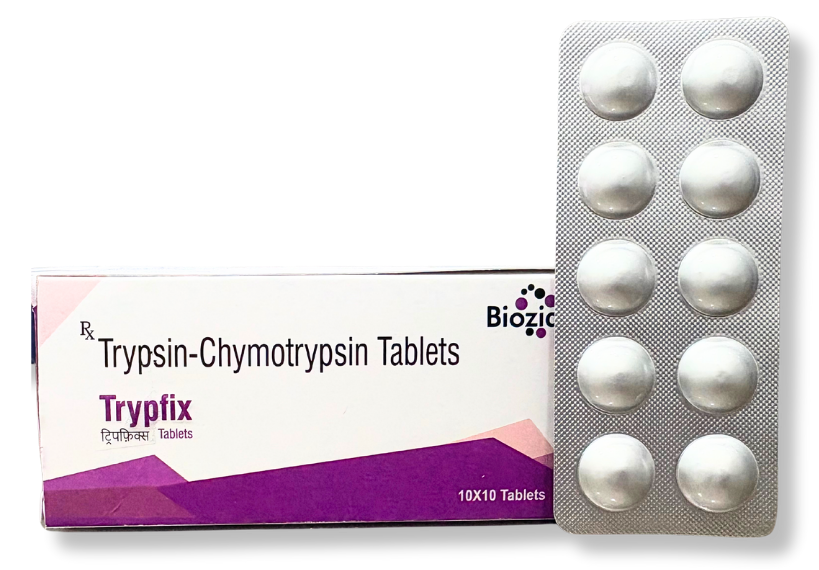
Trypsin Chymotrypsin Tablets
Brand Name: Trypfix
Composition: Trypsin-Chymotrypsin 100000 units of enzymatic activity
MRP: 2100
Packing: 10×10 Alu/Alu
Table of Contents
Product Overview
Trypfix is a therapeutic enzyme formulation containing trypsin chymotrypsin with 100,000 units of enzymatic activity, designed to support faster healing, reduce inflammation, and manage swelling associated with injuries, surgeries, and inflammatory conditions.
Inflammation is a natural response of the body, but when it becomes excessive or prolonged, it can delay healing, increase pain, and restrict mobility. Proteolytic enzymes like trypsin and chymotrypsin have been clinically used for decades to modulate inflammation, improve tissue repair, and reduce edema without the gastric risks commonly associated with long-term NSAID use.
Unlike painkillers that only mask symptoms, trypsin chymotrypsin works at the biological level, helping the body clear inflammatory debris and damaged proteins that slow down recovery.
Key Highlights
-
Contains trypsin chymotrypsin (100,000 enzymatic units)
-
Helps reduce swelling, pain, and inflammation
-
Supports faster tissue healing after injury or surgery
-
Useful in orthopedic, dental, sports, and post-operative recovery
-
Non-sedating and does not cause dependency
-
Manufactured under strict quality and safety standards
How Trypsin Chymotrypsin Works (Mechanism of Action)
To understand why trypsin chymotrypsin is effective, it’s important to understand how inflammation delays healing.
1. Role of Inflammation in Injury
When tissues are injured (due to trauma, surgery, or infection), the body releases inflammatory proteins, fibrin deposits, and cellular debris. While this response is protective initially, excess inflammatory buildup causes:
-
Swelling (edema)
-
Pain and pressure
-
Reduced blood flow
-
Slower tissue repair
2. Action of Trypsin
Trypsin is a proteolytic enzyme that breaks down damaged proteins and fibrin deposits at the injury site. This helps:
-
Clear inflammatory debris
-
Improve microcirculation
-
Reduce tissue congestion
NCBI reference:
https://www.ncbi.nlm.nih.gov/books/NBK557814/
3. Action of Chymotrypsin
Chymotrypsin complements trypsin by:
-
Breaking down denatured proteins
-
Reducing edema
-
Enhancing absorption of nutrients at injured tissues
PubMed reference:
https://pubmed.ncbi.nlm.nih.gov/29209994/
4. Combined Effect
Together, trypsin chymotrypsin:
-
Accelerates natural healing
-
Reduces pain indirectly by decreasing pressure
-
Helps restore mobility faster
This biological mechanism is why enzyme therapy is often recommended in post-operative recovery and soft tissue injuries.
Uses & Indications for Trypfix
Trypfix (trypsin chymotrypsin) is commonly prescribed for:
Inflammatory & Injury-Related Conditions
-
Soft tissue injuries
-
Muscle strain and ligament injuries
-
Sports injuries
-
Sprains and trauma
Post-Surgical Recovery
-
Orthopedic surgeries
-
Dental and maxillofacial surgeries
-
General surgical wound recovery
Clinical evidence supports enzyme therapy in reducing post-operative swelling and pain:
Orthopedic & Joint Conditions
- Osteoarthritis (adjunct therapy)
-
Joint stiffness due to inflammation
-
Tendinitis and bursitis
Dental & ENT Applications
-
Tooth extraction recovery
-
Facial swelling
-
Sinus inflammation
Dosage and Administration
Dosage should always be decided by a healthcare professional.
Typical adult usage:
-
-
1 tablet 2–3 times daily, or as prescribed
-
Administration guidelines:
-
-
Take on an empty stomach or as advised
-
Swallow whole with water
-
Do not crush or chew
-
Maintain consistent timing for best results
-
Unlike painkillers, trypsin chymotrypsin may show gradual but sustained improvement over a few days.
Who Should Use This Tablet
Trypfix is particularly beneficial for:
-
Patients recovering from surgery
-
Individuals with sports-related injuries
-
Patients with chronic inflammatory swelling
-
Those who cannot tolerate long-term NSAIDs
-
People needing faster functional recovery
Who Should Avoid or Use with Caution
According to clinical guidance and pharmacological safety data:
Use caution or avoid in:
-
Patients with bleeding disorders
-
Active peptic ulcer disease
-
Severe liver or kidney disease
-
Patients on anticoagulant therapy (unless advised)
Authoritative reference:
https://www.ncbi.nlm.nih.gov/books/NBK557814/
This balanced disclosure strengthens medical credibility and trust
Common Myths & Misconceptions
Myth: Trypsin chymotrypsin is just a painkiller
Fact: It does not block pain signals; it reduces inflammation at tissue level
Myth: Enzyme therapy works instantly
Fact: Enzymes support biological healing and show progressive improvement
Myth: It is only useful after surgery
Fact: It is also effective in injuries, arthritis, and inflammation
Myth: Enzymes damage the stomach
Fact: When taken correctly, they are generally well tolerated
Mistakes People Commonly Make
-
Using enzyme tablets irregularly
-
Expecting immediate pain relief like NSAIDs
-
Stopping therapy too early
-
Combining with blood thinners without advice
-
Using low-potency enzyme products
Safety, Side Effects & Precautions
Most patients tolerate trypsin chymotrypsin well.
Possible side effects (rare):
-
-
Mild stomach discomfort
-
Nausea
-
Allergic reactions (very rare)
-
Clinical safety overview:
https://www.ncbi.nlm.nih.gov/books/NBK557814/
Seek medical attention if unusual bleeding or allergic symptoms occur
Why Trypfix
Trypfix provides:
-
-
Standardized 100,000 enzymatic units
-
Reliable potency and absorption
-
Consistent clinical outcomes
-
Quality-controlled manufacturing
-
This makes Trypfix a dependable choice for inflammation management and recovery support.
FAQ
Q1. What is trypsin chymotrypsin used for?
It is used to reduce inflammation, swelling, and pain and to support faster healing after injury or surgery
Q2. Is trypsin chymotrypsin a painkiller?
No. It reduces inflammation rather than blocking pain signals
Q3. How long does trypsin chymotrypsin take to work?
Improvement usually begins within a few days, depending on the condition
Q4.Can it be taken with painkillers?
Yes, but only under medical advice, especially if NSAIDs are involved
Q5. Is trypsin chymotrypsin safe for long-term use?
Generally safe when prescribed, but duration should be decided by a doctor
Q6. Can it cause bleeding?
Rarely, and mainly in patients with bleeding disorders or on anticoagulants.