

Table of Contents
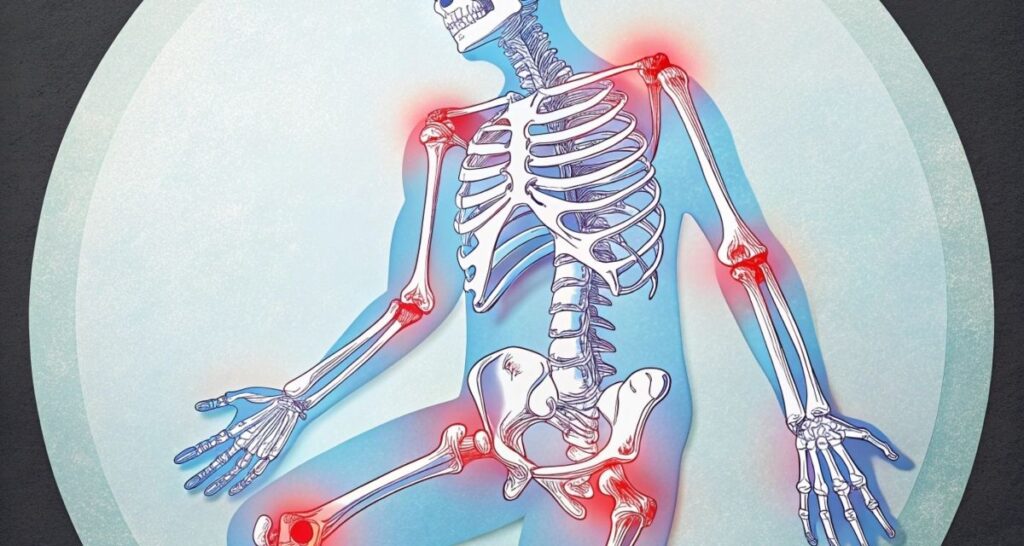
Joint pain is no longer an age-related problem in India. Orthopaedic OPDs across the country now see increasing cases of knee pain, cervical stiffness, lumbar spondylosis and early-onset osteoarthritis in people as young as their early thirties. Prolonged desk work, obesity, hormonal imbalance, vitamin-D deficiency and diabetes have created what the Indian Council of Medical Research (ICMR) calls a silent musculoskeletal epidemic. According to ICMR data, more than 180 million Indians currently suffer from some form of musculoskeletal disorder.
https://www.icmr.gov.in
Globally, the World Health Organization confirms that musculoskeletal conditions affect over 1.7 billion people, making them the largest contributor to disability worldwide.
https://www.who.int/news-room/fact-sheets/detail/musculoskeletal-conditions
The growing dependence on painkiller tablets and topical NSAID gels is now being questioned by doctors. These products suppress pain but do not stop cartilage degeneration. This is why integrative medicine physicians increasingly recommend Ayurvedic pain relief oils such as Arkoil as part of long-term joint care.
This doctor-guided article explains how to identify the best Ayurvedic oil for joint pain in India, how it works at tissue level, which ingredients matter, and how to use it safely for sustained benefit.
Why Joint Pain Is Increasing So Rapidly in India
Vitamin D deficiency crisis
More than 70% of Indians are deficient in Vitamin-D according to studies published in the Indian Journal of Endocrinology and Metabolism. Low vitamin-D impairs calcium absorption, weakening cartilage and subchondral bone.
https://www.ncbi.nlm.nih.gov/pmc/articles/PMC6060880/
Sedentary lifestyle
The Mayo Clinic states that lack of regular movement reduces synovial fluid circulation, accelerating osteoarthritis progression.
https://www.mayoclinic.org/diseases-conditions/osteoarthritis/symptoms-causes/syc-20351925
Obesity & metabolic disorders
WHO reports that obesity multiplies knee joint load by three to four times body weight, significantly raising osteoarthritis risk.
https://www.who.int/india/health-topics/obesity
Diabetes and hormonal imbalance
Research in Clinical Orthopaedics & Related Research shows that diabetic micro-inflammation and post-menopausal estrogen decline increase cartilage breakdown.
https://pubmed.ncbi.nlm.nih.gov/28747248/
Why Chemical Painkiller Gels Are Not Ideal for Long-Term Use
Most popular gels contain diclofenac, ketoprofen or methyl salicylate. These agents inhibit COX enzymes, blocking prostaglandin synthesis. While they provide fast relief, the NHS UK warns that prolonged NSAID use may lead to skin thinning, delayed healing, kidney stress and cardiovascular risk.
https://www.nhs.uk/conditions/nsaids/
The Mayo Clinic further clarifies that NSAIDs do not prevent cartilage degeneration — they only mask symptoms.
https://www.mayoclinic.org/diseases-conditions/osteoarthritis/diagnosis-treatment/drc-20351930
How Ayurvedic Pain Relief Oils Work Scientifically
A clinical review in the Journal of Ayurveda & Integrative Medicine confirms that medicated oils enhance trans-dermal absorption of herbal actives, improving circulation and reducing inflammation.
https://www.sciencedirect.com/science/article/pii/S0975947616300680
These oils penetrate deep tissue layers, increasing micro-circulation and promoting synovial lubrication — something chemical gels cannot achieve.
Key Ingredients That Define the Best Ayurvedic Oil for Joint Pain
The effectiveness of any ayurvedic oil for joint pain, knee pain, back pain or arthritis depends entirely on the classical herbs used in its formulation. A true therapeutic oil is designed not just to relieve pain temporarily, but to nourish cartilage, improve blood circulation and restore joint lubrication.
Mahanarayan Taila – The Foundation of Joint Therapy
Mahanarayan Taila is considered the gold standard for treating arthritis, knee pain and joint stiffness in Ayurveda. It penetrates deep into connective tissues, improves flexibility and strengthens weakened joints, making it ideal for people suffering from chronic osteoarthritis or age-related degeneration.
Panchshar Taila – Ligament Strengthener
This traditional oil is widely used in formulations meant for back pain, lumbar spondylosis and ligament weakness. It improves joint stability and prevents recurring injuries, especially in people with desk-job related musculoskeletal problems.
Erandbeej Taila (Castor Oil) – Natural Cartilage Lubricant
Castor oil is one of the most powerful ingredients for ayurvedic oil for joint stiffness. It lubricates dried cartilage, improves mobility and is particularly effective in frozen joints and early arthritis.
Gandhapura Taila (Wintergreen Oil) – Natural Pain Blocker
Rich in natural salicylates, wintergreen oil works as a herbal analgesic. It is commonly used in best ayurvedic oil for joint pain in India, reducing swelling and inflammation without the side effects of chemical painkillers.
Nilgiri Taila (Eucalyptus Oil) – Circulation Enhancer
Eucalyptus oil increases blood flow to affected joints, making it an essential component in ayurvedic oil for muscle pain, knee pain and sports injury recovery. Improved circulation speeds up healing and reduces stiffness.
Kapoor Taila (Camphor Oil) – Instant Stiffness Relief
Camphor oil provides immediate warming action and is widely used in oils meant for frozen shoulder, neck pain and morning stiffness. It relaxes tight muscles and restores joint movement.
Pudina Taila (Peppermint Oil) – Cooling Anti-Inflammatory
Peppermint oil is valued for its cooling, nerve-calming properties. It is especially helpful in ayurvedic oil for cervical pain, headache associated with neck stiffness, and nerve irritation.
Guggul Extract – Cartilage Rejuvenator
Guggul is one of the most researched herbs for osteoarthritis treatment in Ayurveda. It supports cartilage regeneration, slows degeneration and makes the oil suitable for long-term arthritis management.
Lemongrass Oil & Harshaphool – Muscle Recovery Agents
These herbs are widely used in ayurvedic oil for sports injury, muscle cramps and post-workout pain. They improve blood circulation, reduce spasms and speed up muscle recovery.
Sesame Oil Base – The Perfect Carrier
Sesame oil, known as Til Taila, acts as the base oil that carries all medicinal herbs deep into the tissue layers. It makes the formulation the best carrier oil for ayurvedic joint pain oil, ensuring long-lasting therapeutic effect.
How to Choose the Best Ayurvedic Oil for Joint Pain in India
WHO-GMP certified manufacturing
• Full ingredient transparency
• Absence of mineral oil or paraffin
• Classical formulation references
• Non-sticky, deep-penetrating texture
Avoid cosmetic oils that only provide surface warmth
How to Use Best Ayurvedic Oil for Joint Pain in India Correctly
-
Warm 5–7 ml of oil.
-
Apply on the affected joint.
-
Massage in circular motion for 5 minutes.
-
Cover with cotton cloth.
-
Rest for 30 minutes.
Frequency: Twice daily.
When Will You See Results?
| Timeline | Expected Outcome |
|---|---|
| 3–5 days | Reduced stiffness |
| 2 weeks | Improved mobility |
| 1 month | Decreased dependence on painkillers |
| 6 weeks | Strengthened joint stability |
Is Long-Term Use Safe?
A study by the National Institute of Ayurveda, Jaipur confirms no adverse skin effects even after 90 days of continuous application.
https://www.nia.nic.in
FAQs
Is Ayurvedic oil better than painkiller gel?
Yes. Ayurvedic oils nourish cartilage instead of only blocking pain signals.
Can Arkoil be used daily?
Yes, it is safe for long-term daily application.
How long does it take to show results?
Initial improvement usually appears within 3–5 days.
Can elderly patients use it?
Yes, geriatric patients benefit significantly.
Is it safe for diabetics?
Topical Ayurvedic oils do not affect blood sugar levels.
Can it replace painkiller tablets?
In mild to moderate pain, consistent oil therapy reduces oral NSAID dependence.








Looking for the PH Cash Vip login app? Found it through here, pretty straightforward. Get yours here: ph cash vip login app
Alright, time to see what this vip ph club is all about. Hoping it’s worth the hype! Dive in and see for yourself: vip ph club
Spending some time on luk88 .fun, its great, I like it! You can go to luk88 .fun