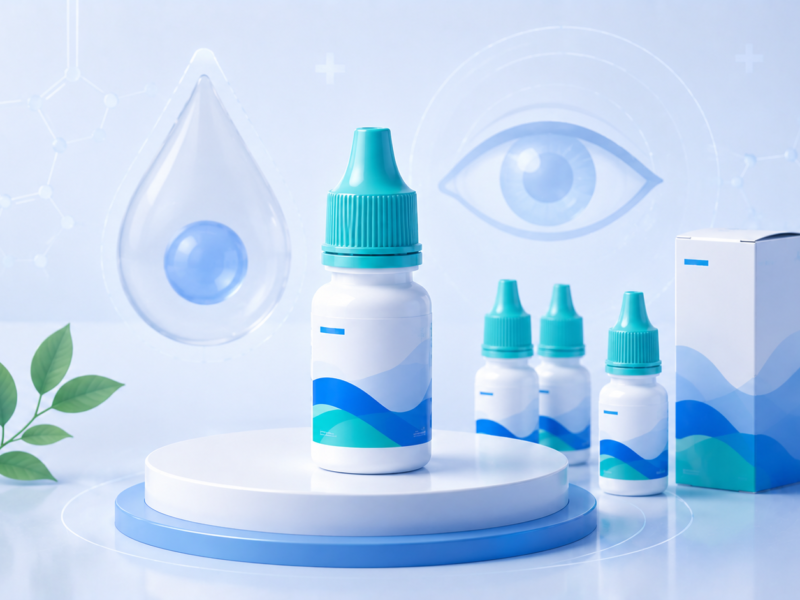
Adding an anti-allergy ophthalmic line to your portfolio usually means finding the right olopatadine eye drops manufacturer rather than building a sterile fill line yourself. Ophthalmic drops are a small-volume, high-trust product: every millilitre is sterile-filled, sealed in a tamper-evident dropper bottle, and judged on clarity and consistency batch after batch. This page is for distributors, marketing firms and franchise partners who want to source olopatadine under their own brand — covering the strengths and pack formats on offer, how minimum orders and packaging work, and the practical steps to raise an enquiry.
Key takeaways (TL;DR)
- Olopatadine is an ophthalmic (eye) drop, so it must be filled on a sterile / aseptic line — not a standard liquid line.
- Common commercial strengths sit at 0.1% and 0.2%, supplied in small dropper bottles (often 5 ml) with sealed, tamper-evident caps.
- You can take it on a third-party (contract) basis or through a PCD / ophthalmic franchise for your own territory.
- Minimum order quantity, bottle size, label artwork and carton design are agreed up front and confirmed in a written quote.
- Vet the maker on sterile capability and certifications first — Biozia makes the PATASAFE olopatadine 0.2% brand on a WHO-GMP, ISO-certified ophthalmic line.
Why olopatadine is a sterile-line product
The single most important sourcing fact about any eye drop is that it is a sterile dosage form. Unlike a syrup or a tablet that runs on a standard GMP line, an ophthalmic solution has to be prepared, filtered and filled in a controlled aseptic environment, then sealed so the bottle stays sterile until it reaches the counter. That is why a credible olopatadine supplier is defined less by price and more by whether they actually operate a dedicated ophthalmic line. If a manufacturer’s strength is tablets and syrups but eye drops are an afterthought, that is a signal to keep looking.
Strengths and pack formats to specify
Olopatadine reaches the market in a couple of standard strengths, and your brief should pin down the strength, the bottle size and the closure before you talk numbers. The table below is a quick reference for the formats buyers usually request.
| Specification | Typical options | What to confirm |
|---|---|---|
| Strength | Olopatadine 0.1%, 0.2% | Which strength(s) your market sells |
| Bottle | 5 ml LDPE dropper bottle (other fills on request) | Fill volume and dropper tip type |
| Closure | Tamper-evident sealed cap | Seal style and child-resistance, if needed |
| Carton | Mono carton with label and insert | Artwork, language and barcode |
| Brand | Your brand, or an existing label e.g. PATASAFE | Trademark and label ownership |
Formats are indicative; confirm the exact pack and any custom fill in your written quote.
Two ways to source: third-party vs franchise
How you take the product depends on whether you want an open or a protected market. Both routes use the same certified ophthalmic line; they differ in branding and territory.
Third-party / contract manufacturing
The maker produces olopatadine to your specification under your brand, and you handle distribution wherever you choose. This suits marketing companies and distributors who already have reach and simply want a reliable sterile source for their ophthalmic range.
PCD / ophthalmic franchise (monopoly)
You take an existing eye-care brand — such as PATASAFE — on monopoly rights for a defined territory, often as part of a wider ophthalmic basket. This suits individuals and smaller teams who want ready-made packaging and a protected area rather than building a brand from scratch.
How MOQ, packaging and pricing are set
There is no single rate for an eye drop, because the cost moves with how you order it. The minimum order quantity for a sterile batch is usually larger than for a casual top-up, since aseptic filling runs are set up per batch. Beyond volume, your packaging choices — bottle size, dropper tip, carton finish, inserts and any export-grade specs — all feed into the final net rate. The sensible approach is to share your full brief and let the quote reflect your actual pack, rather than chasing a headline per-bottle figure.
How to raise an enquiry
- State the strength — 0.1%, 0.2% or both, with the fill volume you want.
- Choose the route — third-party under your brand, or a franchise territory.
- Send your papers — Drug License, GST and, for own-brand work, trademark details.
- Share pack preferences — bottle, cap, carton and any artwork you already hold.
- Request the quote — net rate, MOQ and timeline for your exact specification.
Biozia Lifesciences is a WHO-GMP and ISO-certified manufacturer in Yamunanagar, Haryana, with a dedicated ophthalmic line among its nine dosage forms and 250+ formulations. Its eye-care range includes PATASAFE (olopatadine 0.2%) alongside other ophthalmic brands, backed by leadership carrying 40+ years in pharma and dependable pan-India supply — the kind of sterile track record that is hard to find when many makers stop at tablets and syrups.
Planning an ophthalmic line or a single olopatadine SKU? Request a manufacturing quote from Biozia Lifesciences →
Related guides
- Third-Party Pharma Manufacturing in India
- Moxifloxacin + Loteprednol Eye Drops Manufacturer
- Linezolid Injection Manufacturer in India
- Paracetamol IV Infusion Manufacturer in India
Frequently asked questions
What strengths of olopatadine eye drops can be manufactured?
The common commercial strengths are 0.1% and 0.2%, supplied in small dropper bottles. Biozia’s own brand, PATASAFE, is an olopatadine 0.2% drop. Confirm the strength and fill volume your market needs when you raise an enquiry.
Can I get olopatadine eye drops under my own brand?
Yes. On a third-party basis the manufacturer fills the drops to your specification under your brand name and artwork, while you handle distribution. You will need your Drug License, GST and trademark details to start.
What is the difference between third-party supply and a PCD franchise?
Third-party supply produces under your own brand for any market you reach. A PCD or ophthalmic franchise gives you monopoly rights to an existing brand, such as PATASAFE, within a defined territory, often as part of a wider eye-care basket.
What packaging do olopatadine eye drops come in?
They are typically filled in small LDPE dropper bottles, often 5 ml, with a tamper-evident sealed cap and a mono carton with label and insert. Bottle size and pack details are agreed up front and confirmed in your quote.
Why does sterile capability matter when choosing an eye-drop maker?
Eye drops are a sterile dosage form filled on aseptic lines, not standard liquid lines. A maker with a proven, certified ophthalmic line gives you the quality assurance that distributors and institutional buyers expect, which is why sterile capability should top your checklist.
Author: Biozia Lifesciences Editorial Team — insights drawn from Biozia Lifesciences’ WHO-GMP & ISO-certified manufacturing and PCD franchise operations in India, led by 40+ years of industry experience. This article is general business information and not medical or legal advice.
Interested in a Biozia PCD Franchise?
Get monopoly rights, a wide product range and full marketing support in your territory.