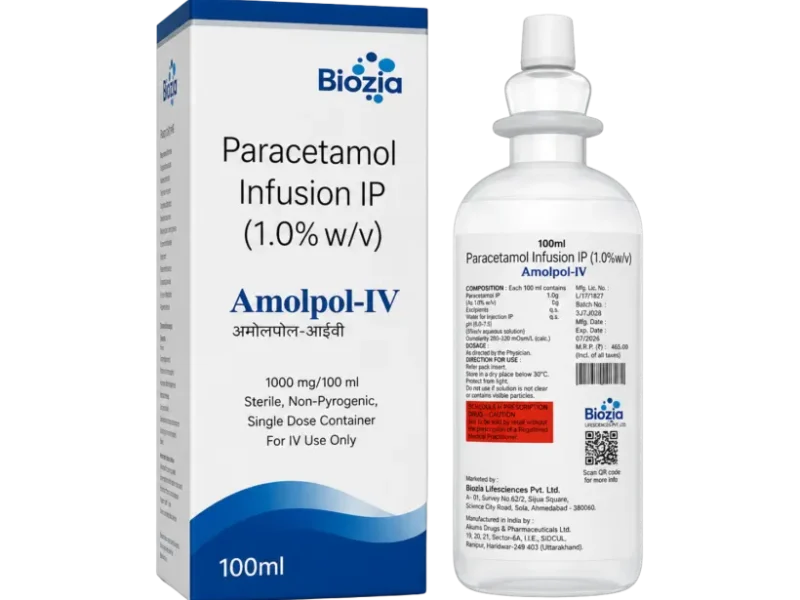
AMOLPOL-IV
PARACETAMOL 1000MG/100ML
| Composition | PARACETAMOL 1000MG/100ML |
|---|---|
| Packing | 100ml |
| MRP | ₹ 465 |
| Dosage Form | Infusions |
About AMOLPOL-IV
Amolpol-IV is an intravenous infusion containing Paracetamol (Acetaminophen) 1000 mg per 100 ml. It is a widely trusted analgesic (pain reliever) and antipyretic (fever reducer) given directly into the bloodstream, allowing a rapid and predictable effect when oral medicines are not suitable.
Because it is administered by infusion, Amolpol-IV is especially useful in hospital settings — for example, in the immediate period after surgery, or when a patient is unable to take medication by mouth.
Uses of AMOLPOL-IV
This medicine is commonly used for:
- Short-term management of moderate pain, especially after surgery
- Rapid reduction of high fever when fast control is needed
- Pain and fever relief in patients who cannot take oral medicines
Indications
Intravenous paracetamol is indicated for the short-term treatment of moderate pain and for the reduction of fever, particularly when the intravenous route is clinically justified — such as an urgent need to treat pain or hyperthermia, or when oral or rectal administration is not possible.
How AMOLPOL-IV Works
Paracetamol is believed to act mainly in the brain, where it reduces the production of prostaglandins — natural chemicals that signal pain and raise body temperature. By lowering these signals, it eases pain and brings down fever. The intravenous route delivers the medicine straight into the blood for a fast, reliable effect.
Mechanism of Action
Paracetamol produces analgesia and antipyresis predominantly through central inhibition of prostaglandin synthesis. It is a weak peripheral inhibitor of cyclo-oxygenase (COX-1 and COX-2) but acts more effectively within the central nervous system, where it is thought to inhibit a COX variant and modulate descending serotonergic and endocannabinoid pain pathways. Its antipyretic effect results from inhibition of prostaglandin synthesis in the hypothalamic thermoregulatory centre.
Key Benefits
- Rapid onset — useful when quick pain or fever control is required
- Convenient for post-operative and hospitalised patients
- Well-established safety profile at recommended doses
- Gentle on the stomach compared with some other painkillers
Did You Know?
Paracetamol is one of the most widely used medicines in the world and appears on the WHO Model List of Essential Medicines. The intravenous form was developed specifically for situations where rapid, reliable pain and fever control is essential.
When & How to Take
Amolpol-IV is administered by a doctor or nurse in a clinical setting, usually as a slow infusion over about 15 minutes. The dose and frequency are decided by the treating physician based on the patient's weight and condition. It is never self-administered.
Always follow the dosage and schedule advised by your doctor — this is general guidance only.
Possible Side Effects
Paracetamol is generally very well tolerated. Uncommon effects may include nausea, mild discomfort at the infusion site, or a temporary drop in blood pressure during the infusion. Serious reactions are rare. Taking more than the recommended dose can harm the liver, which is why it is always given under medical supervision.
Precautions & Safety
- Use with caution in patients with liver or kidney problems
- Avoid combining with other paracetamol-containing medicines to prevent accidental overdose
- Tell your doctor about alcohol use and all current medications
- Administer only under qualified medical supervision
Myths vs Facts
Injectable paracetamol is much stronger than tablets.
The IV form is not 'stronger' — it simply acts faster and more predictably because it bypasses the digestive system. Its therapeutic effect is comparable to an equivalent oral dose.
Paracetamol carries no risk because it is so common.
At correct doses it is very safe, but exceeding the recommended amount can seriously harm the liver. That is exactly why dosing is controlled by a doctor.