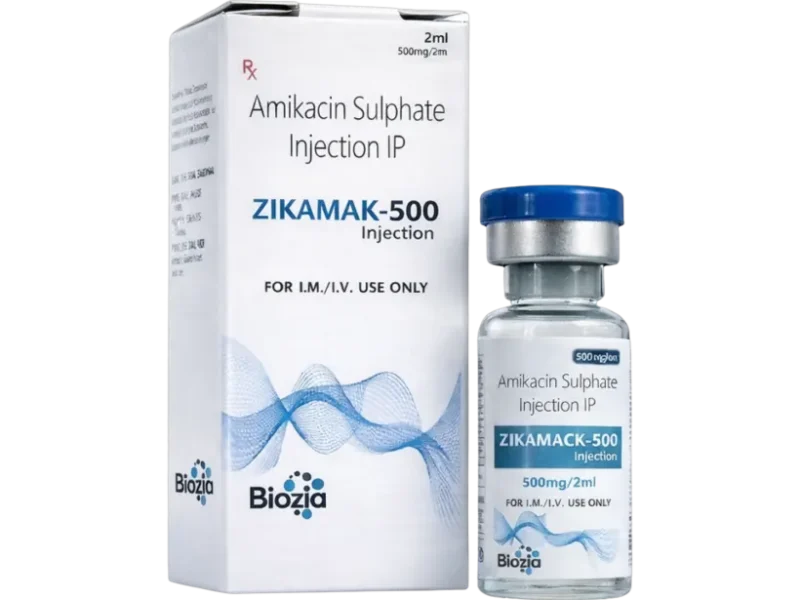
Zikamak-500 Injection
Amikacin Sulphate 500 mg
| Composition | Amikacin Sulphate 500 mg |
|---|---|
| Packing | 2ml Vial |
| MRP | ₹ 95 |
| Dosage Form | Injections |
About Zikamak-500 Injection
Zikamak-500 Injection contains Amikacin Sulphate 500 mg, a potent aminoglycoside antibiotic that is highly effective against serious Gram-negative bacterial infections, including many strains resistant to other aminoglycosides like Gentamicin. It is used exclusively in hospital settings under close medical supervision.
Biozia Lifesciences' Zikamak-500 is an important tool in the management of severe infections caused by resistant organisms, including hospital-acquired infections in critically ill patients, where reliable bactericidal activity against Gram-negative pathogens is essential.
Uses of Zikamak-500 Injection
This medicine is commonly used for:
- Treating serious hospital-acquired Gram-negative bacterial infections
- Managing severe urinary tract infections caused by resistant organisms
- Treating septicaemia and bloodstream infections
- Managing respiratory infections including hospital-acquired pneumonia
- Treating bone, joint, and soft-tissue infections caused by susceptible bacteria
Indications
Indicated for short-term treatment of serious infections caused by susceptible strains of Gram-negative bacilli including Pseudomonas aeruginosa, Escherichia coli, Klebsiella pneumoniae, Enterobacter spp., Proteus spp., Serratia marcescens, and Providencia stuartii. Clinical indications include septicaemia, respiratory tract infections, bone and joint infections, CNS infections (including meningitis), intra-abdominal infections, burns, post-operative infections, and complicated urinary tract infections, particularly where gentamicin or tobramycin resistance is suspected.
How Zikamak-500 Injection Works
Zikamak-500 kills bacteria by entering their cells and disrupting the process they use to make the proteins they need to survive and multiply. Without being able to produce proteins properly, bacteria die rapidly. Amikacin is particularly valuable because it can destroy many bacteria that have become resistant to other aminoglycoside antibiotics.
Mechanism of Action
Amikacin is a semi-synthetic aminoglycoside derived from kanamycin A. It binds irreversibly to the 30S ribosomal subunit of bacterial ribosomes, causing misreading of mRNA codons and inhibiting translocation, leading to production of aberrant and non-functional proteins and ultimately bactericidal cell death. Amikacin's structural modifications at the aminoglycosidic positions confer resistance to most aminoglycoside-modifying enzymes (acetylases, phosphotransferases, nucleotidyltransferases) that inactivate gentamicin and tobramycin, accounting for its broader efficacy against resistant Gram-negative organisms. Bactericidal activity is concentration-dependent, supporting once-daily extended-interval dosing strategies.
Key Benefits
- Effective against resistant Gram-negative bacteria that have failed gentamicin treatment
- Concentration-dependent bactericidal killing for potent rapid action
- Broad coverage across clinically important Gram-negative pathogens including Pseudomonas
- A reliable option for serious infections where other aminoglycosides have failed
Did You Know?
Amikacin was specifically engineered to overcome the most common aminoglycoside resistance mechanisms — making it one of the few antibiotics that remains effective against many multidrug-resistant Gram-negative bacteria, including some strains of Pseudomonas aeruginosa.
When & How to Take
Zikamak-500 Injection is given intravenously or intramuscularly by a healthcare professional in a hospital setting, as prescribed by your doctor. Serum drug levels and kidney function are routinely monitored during treatment to ensure safety and effectiveness.
Always follow the dosage and schedule advised by your doctor — this is general guidance only.
Possible Side Effects
The most important side effects are effects on hearing (ototoxicity) and kidney function (nephrotoxicity), particularly with prolonged use or high cumulative doses. Patients may notice ringing in the ears or changes in hearing. Regular monitoring helps detect these early. Tell your doctor immediately if you notice any hearing changes or reduced urine output.
Precautions & Safety
- Requires regular monitoring of kidney function and serum Amikacin levels during therapy
- Avoid use with other nephrotoxic or ototoxic drugs (e.g., furosemide, other aminoglycosides) unless unavoidable
- Use with extreme caution in patients with pre-existing kidney disease or hearing impairment
- Not recommended during pregnancy due to risk of foetal ototoxicity
- Avoid prolonged courses; use the shortest effective duration as prescribed by your doctor
Myths vs Facts
Amikacin is just a stronger version of Gentamicin and works the same way.
While both are aminoglycosides with a similar mechanism, Amikacin's unique chemical structure makes it resistant to most bacterial enzymes that destroy Gentamicin — giving it effective activity against many Gentamicin-resistant organisms.
Once hearing side effects are noticed, they always reverse on stopping the drug.
Aminoglycoside-induced ototoxicity can sometimes be permanent, especially with delayed detection or prolonged exposure. This is why regular monitoring during therapy is critical.