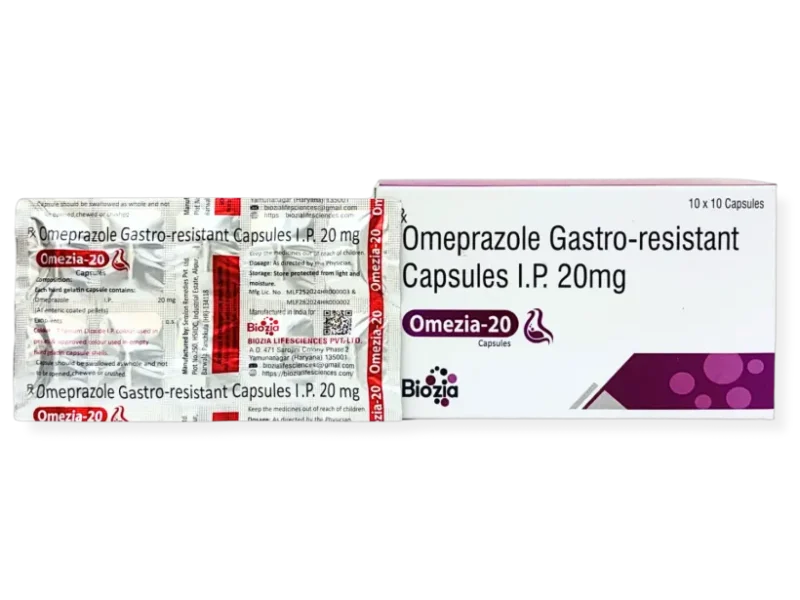
Omezia-20 Capsule
Omeprazole 20 mg
| Composition | Omeprazole 20 mg |
|---|---|
| Packing | 10x10 Strip Pack |
| MRP | ₹ 300 |
| Dosage Form | Capsules |
About Omezia-20 Capsule
Omezia-20 Capsule contains Omeprazole 20 mg, a widely used proton pump inhibitor that helps reduce the amount of acid produced in the stomach. It is prescribed to relieve symptoms such as heartburn, acid regurgitation, and stomach pain caused by excess gastric acid.
Omezia-20 is a trusted choice for managing conditions like gastroesophageal reflux disease (GERD), peptic ulcers, and related acid disorders. By controlling acid production at its source, it provides lasting relief and helps the stomach lining heal.
Uses of Omezia-20 Capsule
This medicine is commonly used for:
- Relief from heartburn and acidity
- Treatment of gastroesophageal reflux disease (GERD)
- Healing of stomach and duodenal ulcers
- Prevention of stomach ulcers caused by NSAIDs
- Management of Zollinger-Ellison syndrome
Indications
Omeprazole 20 mg is indicated for the treatment of gastroesophageal reflux disease (GERD), peptic ulcer disease (gastric and duodenal), eradication of Helicobacter pylori in combination regimens, NSAID-induced gastric ulcers, and hypersecretory conditions such as Zollinger-Ellison syndrome. It is also used for the prevention of stress ulcers and as maintenance therapy to prevent relapse of erosive esophagitis.
How Omezia-20 Capsule Works
Omezia-20 works by blocking the tiny pumps in the stomach lining that produce acid. By switching off these pumps, it reduces the total amount of acid in the stomach, allowing irritated or damaged tissue to heal and giving relief from symptoms like burning and discomfort.
Mechanism of Action
Omeprazole is a benzimidazole proton pump inhibitor (PPI) that irreversibly inhibits the H+/K+ ATPase enzyme system (the proton pump) located on the secretory surface of gastric parietal cells. After acid activation in the canalicular space, omeprazole forms a covalent disulfide bond with cysteine residues of the proton pump, suppressing both basal and stimulated gastric acid secretion regardless of the stimulus. Acid suppression persists until new enzyme is synthesized, providing prolonged effect beyond the drug's plasma half-life.
Key Benefits
- Provides prolonged relief from heartburn and acid reflux
- Promotes healing of stomach and esophageal lining
- Reduces risk of ulcer recurrence with appropriate use
- Well-established safety profile for short- and long-term use
Did You Know?
Omeprazole was among the first proton pump inhibitors introduced and revolutionized the treatment of acid-related disorders in the late 1980s — it is now one of the most prescribed medicines globally.
When & How to Take
Omezia-20 is typically taken before a meal, as directed by your doctor. Always follow your doctor's prescribed dosage and duration — do not stop taking it early even if you feel better, as your doctor may advise a full course for complete healing.
Always follow the dosage and schedule advised by your doctor — this is general guidance only.
Possible Side Effects
Omezia-20 is generally well tolerated. Some people may experience mild side effects such as headache, nausea, diarrhea, stomach pain, or flatulence. These effects are usually temporary. Tell your doctor if any side effect is severe or persistent.
Precautions & Safety
- Inform your doctor if you have liver disease, as dose adjustment may be needed
- Long-term use should be monitored by a doctor; prolonged PPI use may affect magnesium and vitamin B12 levels
- Avoid self-medicating — always take as prescribed
- Tell your doctor about all other medicines you take, as omeprazole can interact with certain drugs like clopidogrel
- Not recommended during pregnancy or breastfeeding without medical advice
Myths vs Facts
Acid-reducing medicines like omeprazole are antacids.
Omeprazole is a proton pump inhibitor, not an antacid. Antacids neutralize acid already present in the stomach, while omeprazole stops the stomach from producing excess acid in the first place — a fundamentally different and longer-lasting mechanism.
Once symptoms disappear, you can stop taking omeprazole immediately.
Stopping early without your doctor's guidance can lead to relapse. Your doctor may prescribe a full course to ensure proper healing of the stomach lining, even after symptoms improve.