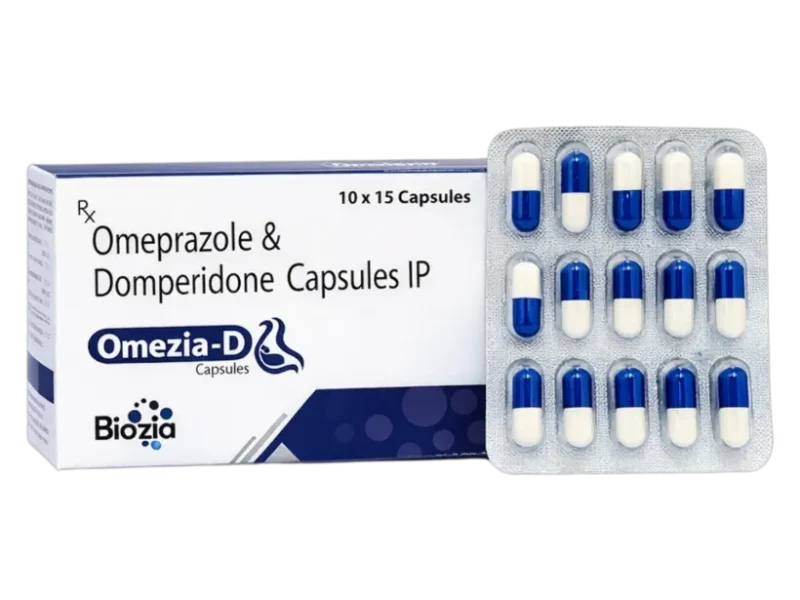
Omezia-D Capsule
Omeprazole 20 mg + Domperidone 10 mg
| Composition | Omeprazole 20 mg + Domperidone 10 mg |
|---|---|
| Packing | 10x15 Blister |
| MRP | ₹ 1100 |
| Dosage Form | Capsules |
About Omezia-D Capsule
Omezia-D Capsule is a combination of Omeprazole 20 mg and Domperidone 10 mg, offering dual-action relief for acid-related digestive problems. Omeprazole reduces excess stomach acid, while Domperidone helps speed up the movement of food through the stomach, reducing bloating, nausea, and regurgitation.
This combination makes Omezia-D especially useful when acid reflux is accompanied by symptoms of sluggish digestion such as nausea, early fullness, or a feeling of food sitting in the stomach. Together, these two ingredients address both the acid problem and the motility problem in one convenient capsule.
Uses of Omezia-D Capsule
This medicine is commonly used for:
- Heartburn and acid reflux accompanied by nausea
- Bloating and feeling of fullness after meals
- Gastroesophageal reflux disease (GERD) with motility symptoms
- Nausea and regurgitation due to delayed stomach emptying
- Dyspepsia (indigestion) with acid and motility complaints
Indications
Omeprazole 20 mg + Domperidone 10 mg is indicated for the management of gastroesophageal reflux disease complicated by gastroparesis or delayed gastric emptying, symptomatic relief of functional dyspepsia with concomitant acid hypersecretion, and nausea and regurgitation associated with gastric motility disorders. The combination targets both acid suppression and prokinetic enhancement of gastric motility.
How Omezia-D Capsule Works
Omeprazole in Omezia-D blocks the stomach's acid-producing pumps, reducing the total acid load. Domperidone works on the gut's nerve signals to help food move forward through the stomach and intestines more efficiently, relieving bloating, nausea, and that uncomfortable sense of fullness after eating.
Mechanism of Action
Omeprazole irreversibly inhibits the gastric H+/K+ ATPase proton pump in parietal cells, suppressing acid secretion. Domperidone is a peripheral dopamine D2 receptor antagonist that increases lower esophageal sphincter tone, enhances gastric peristalsis, and accelerates gastric emptying without crossing the blood-brain barrier to a significant extent. Together, they address both the hypersecretory component and the impaired gastric motility that underlies many reflux-dyspepsia syndromes.
Key Benefits
- Dual action — controls acid and improves stomach motility together
- Relieves nausea, bloating, and regurgitation alongside heartburn
- Convenient single-capsule combination therapy
- Helps meals move through the stomach more comfortably
Did You Know?
Domperidone was originally developed to control nausea and vomiting and later found to be very effective in improving gastric motility, making it a popular companion to acid-suppressing drugs in combination products like Omezia-D.
When & How to Take
Omezia-D is usually taken before meals as directed by your doctor. Follow your doctor's prescribed dosage and timing carefully for the best results. Do not alter or stop the course without consulting your doctor.
Always follow the dosage and schedule advised by your doctor — this is general guidance only.
Possible Side Effects
Common side effects may include headache, dry mouth, diarrhea, or mild stomach discomfort. Domperidone may occasionally cause mild dizziness. These effects are generally mild and short-lived. Tell your doctor if any side effect is severe or persistent.
Precautions & Safety
- Inform your doctor if you have heart conditions, as domperidone may affect heart rhythm in rare cases
- Not recommended for prolonged use without medical supervision
- Tell your doctor about all medicines you take, especially antifungals or antibiotics, which may interact
- Avoid in patients with known liver impairment — consult your doctor
- Not recommended during pregnancy or breastfeeding without medical advice
Myths vs Facts
A combination tablet is just a shortcut — it's better to take two separate pills.
Combination capsules like Omezia-D are formulated to deliver both medicines at the right dose and at the right time relative to each other, making them both convenient and therapeutically effective when prescribed by a doctor.
If my nausea is gone, I can stop Omezia-D straightaway.
Symptom relief does not mean the underlying condition is fully resolved. Always complete the course your doctor prescribes to prevent relapse and ensure proper healing.