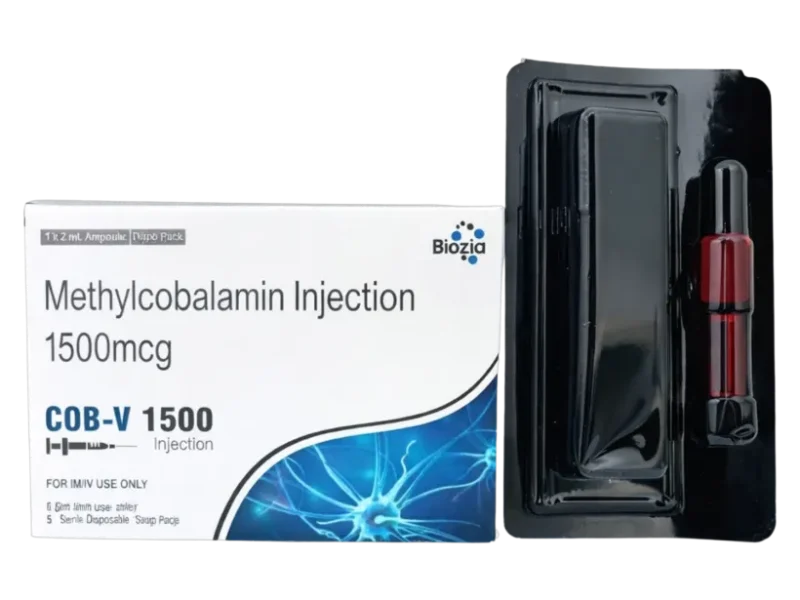
Cob-V 1500 Injection
Methylcobalamin 1500 mcg
| Composition | Methylcobalamin 1500 mcg |
|---|---|
| Packing | 2ml Amp & Dispo Pack |
| MRP | ₹ 65 |
| Dosage Form | Injections |
About Cob-V 1500 Injection
Cob-V 1500 Injection contains Methylcobalamin 1500 mcg, the most bioactive and neurologically active form of Vitamin B12. Unlike cyanocobalamin (the synthetic form found in many supplements), Methylcobalamin is the form that the body and nervous system use directly, making it particularly effective for supporting nerve health and repairing nerve damage.
Cob-V 1500 is administered by injection to ensure maximum absorption — particularly important for patients who cannot absorb Vitamin B12 adequately through the gut (such as those with pernicious anemia, gastrointestinal malabsorption, or those on long-term medications that reduce B12 absorption). It provides high-dose neurotropic vitamin B12 support directly to the bloodstream.
Uses of Cob-V 1500 Injection
This medicine is commonly used for:
- Treatment of Vitamin B12 deficiency
- Supporting nerve health in peripheral neuropathy (numbness, tingling, weakness)
- Management of pernicious anemia and megaloblastic anemia
- Nutritional support in patients who cannot absorb oral Vitamin B12
- Adjunct support in diabetic neuropathy and other neuropathic conditions
Indications
Methylcobalamin 1500 mcg injection is indicated for the treatment of Vitamin B12 deficiency states including pernicious anemia, megaloblastic anemia, and subacute combined degeneration of the spinal cord. It is used in the management of peripheral neuropathy associated with Vitamin B12 deficiency, diabetic neuropathy, and other neuropathic pain conditions. Parenteral administration is indicated when oral absorption is compromised due to intrinsic factor deficiency, gastrointestinal malabsorption syndromes, or long-term use of B12-depleting medicines such as metformin or proton pump inhibitors.
How Cob-V 1500 Injection Works
Methylcobalamin is the form of Vitamin B12 that nerve cells need to function and repair themselves. In the body, it plays a critical role in maintaining the myelin sheath — the protective coating around nerve fibers that allows nerve signals to travel efficiently. When B12 levels are low, this sheath can deteriorate, causing symptoms like numbness, tingling, and weakness. Cob-V 1500 replenishes B12 directly, supporting nerve repair and protection.
Mechanism of Action
Methylcobalamin is the active coenzyme form of Vitamin B12 that participates directly in the methylation cycle as a cofactor for methionine synthase, catalyzing the remethylation of homocysteine to methionine — a critical step in nucleotide synthesis, myelin basic protein production, and neurotransmitter metabolism. Unlike cyanocobalamin, Methylcobalamin does not require hepatic conversion and is preferentially retained in neural tissue. It promotes axonal regeneration and Schwann cell myelination, and supports DNA synthesis in rapidly dividing hematopoietic precursor cells, correcting megaloblastic changes in the bone marrow.
Key Benefits
- Methylcobalamin is the active form of B12 — used directly by nerves without conversion
- Injectable delivery bypasses gastrointestinal absorption barriers for guaranteed bioavailability
- Supports myelin sheath integrity and nerve signal transmission
- Corrects B12 deficiency anemia and associated hematological changes
Did You Know?
Methylcobalamin is the only form of Vitamin B12 that crosses the blood-brain barrier efficiently and is found in cerebrospinal fluid. This makes it specifically valuable for neurological conditions compared to other B12 forms, which must first be converted in the liver before becoming neurologically active.
When & How to Take
Cob-V 1500 Injection is administered by a healthcare professional via intramuscular or intravenous injection. The dosing schedule (daily, weekly, or monthly) is determined by your doctor based on the underlying cause and severity of B12 deficiency. Do not self-administer.
Always follow the dosage and schedule advised by your doctor — this is general guidance only.
Possible Side Effects
Methylcobalamin injections are generally very well tolerated. Some individuals may experience mild discomfort, redness, or swelling at the injection site. Allergic reactions to injection components are rare. Tell your doctor if any side effect is severe or persistent.
Precautions & Safety
- For use under medical supervision only — administered by a healthcare professional
- Inform your doctor if you have Leber's hereditary optic neuropathy — Vitamin B12 should be used with caution in this condition
- Hypokalemia (low potassium) can occur during initial treatment of severe B12 deficiency — your doctor will monitor electrolytes
- Regular monitoring of B12, blood counts, and nerve function may be required during treatment
- Inform your doctor of all other medicines you take
Myths vs Facts
Vitamin B12 injections are only needed by the very elderly.
B12 deficiency can affect people of all ages — particularly vegans and vegetarians (since B12 is found mainly in animal products), people with gastrointestinal conditions that affect absorption, those taking long-term metformin or PPIs, and anyone with pernicious anemia. Injections are needed whenever oral supplementation is insufficient.
If I eat enough meat and dairy, I can't be B12 deficient.
B12 absorption requires intrinsic factor, a protein produced in the stomach. Conditions that damage the stomach lining — such as autoimmune pernicious anemia, gastric surgery, or chronic gastritis — prevent B12 absorption regardless of dietary intake. In these cases, injections bypass the gut and deliver B12 directly.