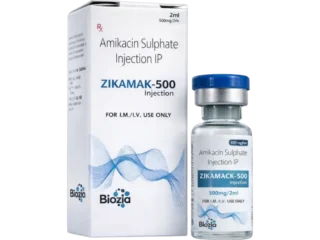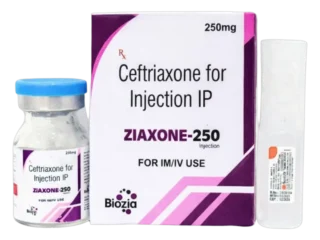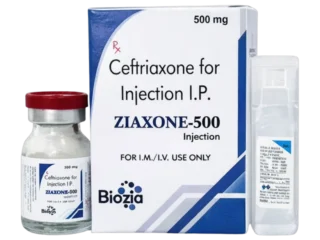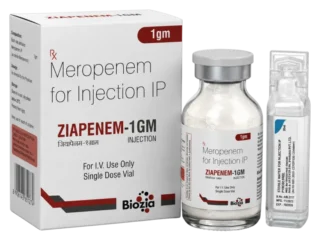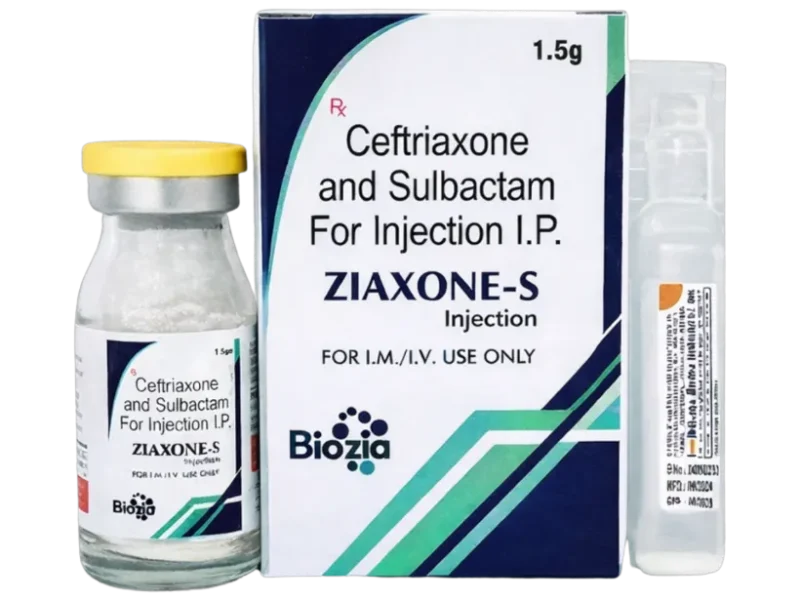
Ziaxone-S Injection
Ceftriaxone 1000 mg + Sulbactam 500 mg
| Composition | Ceftriaxone 1000 mg + Sulbactam 500 mg |
|---|---|
| Packing | Vial+Wfi |
| MRP | ₹ 165 |
| Dosage Form | Injections |
About Ziaxone-S Injection
Ziaxone-S Injection is a powerful combination antibiotic injection containing Ceftriaxone 1000 mg and Sulbactam 500 mg. Sulbactam is a beta-lactamase inhibitor that enhances the spectrum of Ceftriaxone by protecting it from inactivation by beta-lactamase-producing resistant bacteria — including Acinetobacter baumannii, a highly challenging pathogen in hospital settings.
Biozia Lifesciences' Ziaxone-S is designed for serious infections where bacterial resistance is a concern, combining the established broad-spectrum power of Ceftriaxone with the protective and intrinsic antibacterial activity of Sulbactam against difficult-to-treat hospital-acquired pathogens.
Uses of Ziaxone-S Injection
This medicine is commonly used for:
- Treating severe hospital-acquired bacterial infections, including those caused by resistant organisms
- Managing Acinetobacter baumannii infections in ICU patients
- Treating serious respiratory, abdominal, and urinary tract infections
- Managing bloodstream infections and septicaemia caused by resistant bacteria
- Treating complicated skin, soft tissue, and bone infections
Indications
Indicated for moderate to severe infections caused by susceptible organisms and resistant organisms including multi-drug resistant Acinetobacter baumannii (Sulbactam has intrinsic bactericidal activity against Acinetobacter). Indications include nosocomial pneumonia and ventilator-associated pneumonia, intra-abdominal infections, complicated urinary tract infections, skin and soft-tissue infections, septicaemia, meningitis, and bone and joint infections caused by susceptible Gram-positive and Gram-negative organisms including beta-lactamase producers.
How Ziaxone-S Injection Works
Ziaxone-S combines two complementary actions: Ceftriaxone attacks and destroys the cell walls of a wide range of bacteria, while Sulbactam does two things — it blocks the enzymes bacteria use to destroy Ceftriaxone, and it directly kills certain highly resistant hospital bacteria (particularly Acinetobacter) on its own. Together, this combination can tackle infections that Ceftriaxone alone might not be able to overcome.
Mechanism of Action
Ceftriaxone inhibits bacterial cell wall biosynthesis via irreversible binding to PBPs (PBP-1a, PBP-1b, PBP-3), causing peptidoglycan cross-link disruption and autolytic bacterial death. Sulbactam acts as an irreversible inhibitor of class A (TEM, SHV) and class C (AmpC) beta-lactamases, preventing enzymatic hydrolysis of Ceftriaxone and restoring its activity against beta-lactamase-producing strains. Crucially, Sulbactam also exhibits independent bactericidal activity against Acinetobacter baumannii by binding to PBP-2 of Acinetobacter, for which it has intrinsic affinity — making this combination uniquely effective against one of the most clinically challenging multi-drug resistant Gram-negative pathogens.
Key Benefits
- Extended spectrum beyond Ceftriaxone alone due to Sulbactam's dual protective and bactericidal role
- Unique intrinsic activity against multi-drug resistant Acinetobacter baumannii
- Broad coverage of Gram-positive, Gram-negative, and beta-lactamase-producing organisms
- Suitable for empirical therapy in serious hospital-acquired infections where resistance is suspected
Did You Know?
Sulbactam is unique among beta-lactamase inhibitors in that it also has direct bactericidal activity against Acinetobacter baumannii — a pathogen responsible for many of the most difficult-to-treat infections in intensive care units worldwide.
When & How to Take
Ziaxone-S Injection is administered intravenously in a hospital or ICU setting by trained healthcare professionals, as directed by your doctor. The dose and treatment duration depend on the severity of the infection, the causative organism, and the patient's clinical status.
Always follow the dosage and schedule advised by your doctor — this is general guidance only.
Possible Side Effects
Possible side effects include pain at the injection site, diarrhoea, nausea, skin rash, and headache. Allergic reactions, including serious reactions, may occur rarely. Tell your doctor if any side effect is severe or persistent.
Precautions & Safety
- Inform your doctor of any history of allergy to cephalosporins, sulbactam, or penicillins
- Use with caution in patients with renal impairment — dose adjustment may be needed
- Do not co-administer with calcium-containing intravenous solutions
- Monitor liver function in patients with pre-existing hepatic disease
- Sulbactam-containing antibiotics should be used judiciously to prevent the emergence of resistance
Myths vs Facts
Adding Sulbactam to Ceftriaxone just makes the same antibiotic stronger.
Sulbactam extends the spectrum of Ceftriaxone in two distinct ways: by blocking resistance enzymes (protecting Ceftriaxone) and by killing certain resistant bacteria directly — targeting organisms Ceftriaxone alone cannot defeat.
Combination antibiotics are always better than single agents.
Combination antibiotics are prescribed when the clinical or microbiological situation specifically benefits from the combined spectrum. They are not universally superior and should be used based on infection type and suspected organisms.