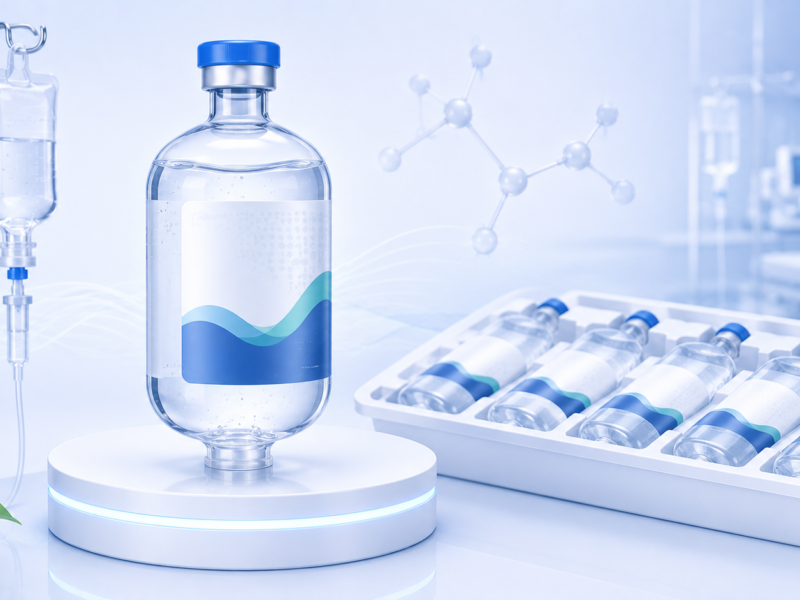
Paracetamol IV infusion is one of the highest-volume sterile lines on any hospital procurement list, which is exactly why finding the right paracetamol infusion manufacturer is harder than it looks. The molecule is familiar, but the product is a large-volume sterile parenteral — and that pushes it into a manufacturing category very few oral-solid makers can serve. If you are a distributor, a marketing company or an institution looking to source ready-to-infuse bags or bottles under your own brand, this guide breaks down the formats, the facility requirements, the supply models and the practical questions to ask before you commit a single purchase order.
Key takeaways (TL;DR)
- Paracetamol IV infusion (commonly 1000mg in 100ml) is a large-volume sterile parenteral — it needs aseptic, infusion-grade lines, not a general tablet plant.
- Packaging format matters commercially: glass bottles, plastic bottles and ready-to-hang bags each suit different buyers and price points.
- Hospital, ICU and institutional demand is steady and tender-driven, so supply reliability and consistent batch quality outrank a low headline rate.
- You can source it via third-party (contract) manufacturing under your brand, or through a PCD franchise for a defined territory.
- Shortlist on WHO-GMP sterile capability, packaging options and MOQ flexibility first — price is the last filter, not the first.
What makes paracetamol IV infusion a specialist product
It is easy to assume that because paracetamol is an everyday molecule, its injectable form is simple to source. The opposite is true. An IV infusion is a sterile liquid delivered directly into the bloodstream in a relatively large volume, so it sits in the most tightly controlled tier of pharmaceutical manufacturing. Every container has to be filled, sealed and sterilised in a validated aseptic environment, and the finished product has to be free of particulates, pyrogens and contamination batch after batch. That is a fundamentally different capability from pressing tablets or filling syrup bottles — and it is why a manufacturer with a proven infusion line is genuinely difficult to replace once you find one.
Formats and packaging you can specify
The most common presentation is a 1000mg/100ml unit, but the container it ships in is a commercial decision as much as a technical one. Different buyers prefer different formats, and the right choice affects both your price and how easily hospitals will adopt your brand.
| Packaging format | Typical use case | Buyer consideration |
|---|---|---|
| Glass bottle (100ml) | Established hospital and tender supply | Familiar, well accepted, heavier to ship |
| Plastic / PP bottle | Volume institutional supply | Lighter, lower breakage, cost-efficient |
| Ready-to-hang IV bag | ICU and high-throughput wards | Convenient, premium positioning |
| Eurohead / infusion set compatible | Standardised ward administration | Easy fit with common infusion sets |
A capable infusion manufacturer should be able to discuss more than one of these and help you match the format to your target accounts rather than offering a single take-it-or-leave-it pack.
The facility bar: what WHO-GMP sterile manufacturing means here
For an infusion product, certification is not a marketing badge — it is the entry ticket. WHO-GMP and ISO systems for a sterile line cover cleanroom classification, environmental monitoring, validated sterilisation and water-for-injection systems, and documented batch records that trace every container back to its raw materials. Schedule M compliance under Indian regulations sets the baseline facility standard. When you are sourcing an infusion, treat sterile-grade certification as a hard gate: a maker who runs tablets and syrups beautifully but lacks a dedicated, audited infusion line simply cannot make this product for you safely.
Who buys it, and why supply reliability wins
Demand for paracetamol IV infusion is concentrated in hospitals, nursing homes, surgical centres and government and institutional tenders — settings where it is used routinely and ordered in steady, predictable volumes. That demand profile changes what “a good manufacturer” means for you as a buyer. Institutions punish stock-outs and inconsistency far more than they reward a slightly cheaper unit. A supplier who can hold quality across large batches, ship on schedule and stand behind documentation during an audit is worth far more than one quoting the lowest rate. When you evaluate makers, weight reliability and capacity at least as heavily as price.
Two ways to source it: third-party vs PCD
There are two common routes to putting a paracetamol IV infusion in the market under your name, and they suit different ambitions.
Third-party / contract manufacturing
The manufacturer produces the infusion to your specification and packaging, and you market it under your own brand across the territories you choose. This suits distributors and marketing companies who want control over branding and reach without owning a sterile plant.
PCD / monopoly franchise
You take rights to a defined territory and sell the company’s existing brand of the product with promotional support. This is a lower-friction start for entrepreneurs who want a recognised range and a protected area rather than building brand artwork from scratch.
MOQ, lead time and how to enquire
Sterile infusion runs are batch-based, so minimum order quantities tend to be set per batch rather than per unit, and they vary with the packaging format and your specifications. Rather than chasing a single number, give the manufacturer enough detail to quote accurately. A clear enquiry usually includes:
- Product and strength — e.g. paracetamol 1000mg/100ml infusion.
- Packaging preference — glass bottle, plastic bottle or ready-to-hang bag.
- Indicative quantity — so the maker can quote per-batch economics.
- Supply model — third-party under your brand, or PCD for a territory.
- Documents in hand — Drug License and GST; brand or trademark details if you are branding.
Treat any quantity, lead time or margin figure as indicative until you have a written quote for your exact specification.
Sourcing paracetamol IV infusion from Biozia Lifesciences
Biozia Lifesciences is a WHO-GMP and ISO-certified pharmaceutical manufacturer based in Yamunanagar, Haryana, with a portfolio of 250+ formulations across nine dosage forms — including the sterile injectables and IV infusions many makers cannot offer. Its AMOLPOL-IV paracetamol 1000mg/100ml infusion is produced on infusion-grade sterile lines, and the company supplies pan-India through both third-party manufacturing and PCD franchise arrangements. With a leadership team carrying 40+ years of pharma experience, Biozia is built around exactly the sterile and infusion strength this product demands.
Looking to source paracetamol IV infusion under your brand or for a territory? Request a manufacturing quote from Biozia Lifesciences →
Related guides
- Third-Party Pharma Manufacturing in India
- Olopatadine Eye Drops Manufacturer in India
- Moxifloxacin + Loteprednol Eye Drops Manufacturer
- Linezolid Injection Manufacturer in India
Frequently asked questions
Why can’t a regular tablet manufacturer make IV infusions?
Because an IV infusion is a sterile, large-volume parenteral that must be filled and sealed in a validated aseptic environment with cleanrooms, water-for-injection systems and far stricter testing. A standard oral-solid plant is not equipped or certified for that, so infusion supply needs a maker with a dedicated sterile line.
What packaging options are available for paracetamol IV infusion?
The 1000mg/100ml unit is commonly offered in glass bottles, plastic or PP bottles, and ready-to-hang IV bags. The right choice depends on your target accounts — bags suit high-throughput wards, while bottles remain widely accepted in tender supply.
Can I get it manufactured under my own brand?
Yes. Through third-party or contract manufacturing, a certified maker produces the infusion to your specification and packaging while you keep the brand and distribution. You will typically need a Drug License, GST registration and your brand or trademark details.
What should I check before choosing an infusion manufacturer?
Confirm WHO-GMP and ISO sterile certification and Schedule M compliance, ask about proven infusion-line capacity, review packaging options and batch documentation, and weigh supply reliability heavily — institutional buyers value consistent, on-time supply over a marginally lower price.
Is third-party supply or a PCD franchise better for this product?
Third-party manufacturing suits buyers who want their own brand and wider control over markets; a PCD franchise suits those who prefer an established brand and a protected territory with promotional support. The right fit depends on your goals, capital and the area you want to cover.
Author: Biozia Lifesciences Editorial Team — insights drawn from Biozia Lifesciences’ WHO-GMP & ISO-certified manufacturing and PCD franchise operations in India, led by 40+ years of industry experience. This article is general business information and not medical or legal advice.
Interested in a Biozia PCD Franchise?
Get monopoly rights, a wide product range and full marketing support in your territory.