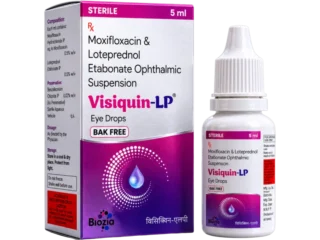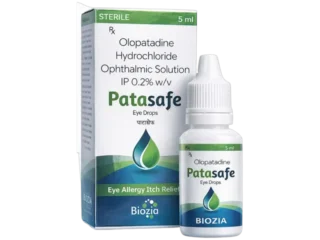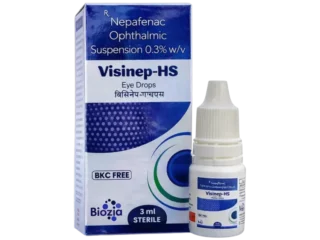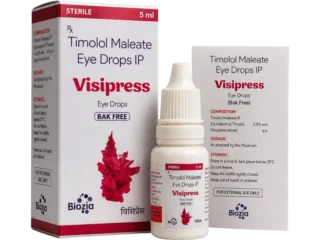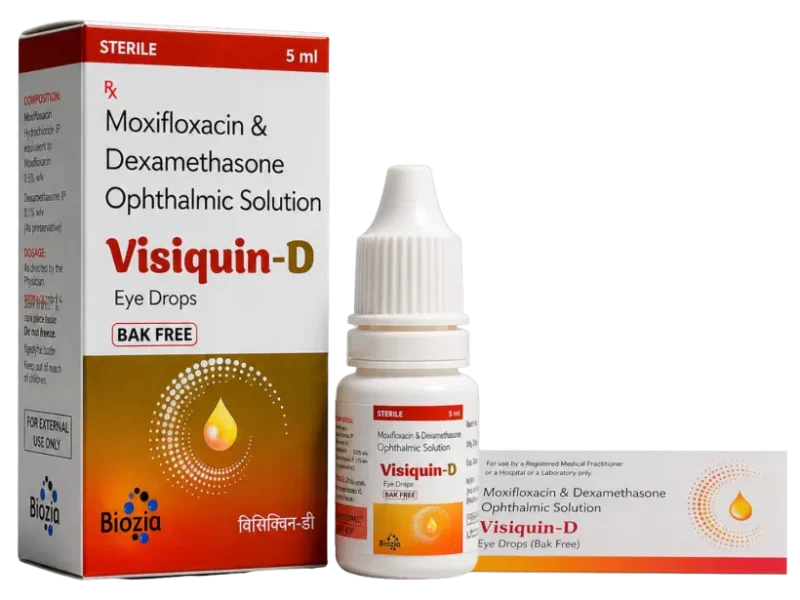
Visiquin-D Eye Drop
Moxifloxacin 0.5% w/v + Dexamethasone 0.1% w/v
| Composition | Moxifloxacin 0.5% w/v + Dexamethasone 0.1% w/v |
|---|---|
| Packing | 5ml |
| MRP | ₹ 165 |
| Dosage Form | Eye Drops |
About Visiquin-D Eye Drop
Visiquin-D Eye Drop is a combination ophthalmic preparation containing Moxifloxacin 0.5% w/v and Dexamethasone 0.1% w/v. This two-in-one formulation pairs a broad-spectrum fourth-generation fluoroquinolone antibiotic with a potent corticosteroid, providing simultaneous antibacterial coverage and anti-inflammatory action in a single eye drop.
Visiquin-D is prescribed when a bacterial eye infection is accompanied by significant inflammation — a common requirement after eye surgery or in conditions like severe bacterial keratitis — making it a convenient and effective combination for managing both components of the condition together.
Uses of Visiquin-D Eye Drop
This medicine is commonly used for:
- Treating bacterial eye infections accompanied by significant inflammation or redness
- Managing post-operative eye infections and inflammation after ocular surgery
- Treating bacterial keratitis with associated inflammatory response
- Managing blepharokeratoconjunctivitis — inflammation of the eyelids and cornea with bacterial involvement
- Preventing infection and controlling inflammation after corneal surgery
Indications
Indicated for the treatment of ocular conditions requiring a combined antibiotic-corticosteroid approach, including post-operative anterior segment inflammation with concurrent bacterial infection risk, bacterial keratitis with significant inflammatory component, and blepharokeratoconjunctivitis. Use requires confirmation that the infection is bacterial and that there is no contraindication to corticosteroid use (e.g., viral or fungal keratitis).
How Visiquin-D Eye Drop Works
Moxifloxacin in Visiquin-D kills the bacteria causing the eye infection, while Dexamethasone — a corticosteroid — reduces the swelling, redness, and pain associated with inflammation. Together they tackle both the infection and the body's inflammatory response simultaneously, speeding up recovery and comfort.
Mechanism of Action
Moxifloxacin inhibits bacterial DNA gyrase and topoisomerase IV, providing bactericidal broad-spectrum antibacterial activity as described for Visiquin. Dexamethasone is a synthetic glucocorticoid that binds cytoplasmic glucocorticoid receptors and translocates to the nucleus, suppressing NF-kB-mediated transcription of pro-inflammatory cytokines (IL-1, IL-6, TNF-alpha) and inhibiting phospholipase A2, thereby reducing prostaglandin and leukotriene synthesis. In the eye, this results in decreased vascular permeability, reduced cellular infiltration, and suppression of the inflammatory cascade.
Key Benefits
- Single drop addresses both the bacterial infection and the inflammatory response
- Moxifloxacin provides broad-spectrum antibacterial coverage including MRSA and Gram-negative organisms
- Dexamethasone rapidly reduces redness, swelling, and discomfort
- Convenient for post-surgical eye care where both infection prevention and inflammation control are required
Did You Know?
Dexamethasone is approximately 25 times more potent than cortisol (the body's natural steroid) in suppressing inflammation. Its high potency makes it one of the most effective ophthalmic corticosteroids — but also the reason it must be used under careful ophthalmological supervision and for only the prescribed duration.
When & How to Take
Use Visiquin-D Eye Drop exactly as prescribed by your ophthalmologist — typically multiple times daily in the affected eye(s). Do not use this drop for longer than prescribed, as extended corticosteroid use in the eye can increase intraocular pressure or delay corneal healing.
Always follow the dosage and schedule advised by your doctor — this is general guidance only.
Possible Side Effects
Mild stinging or burning after instillation may occur. With prolonged corticosteroid use, risks include increased intraocular pressure (which can worsen glaucoma), delayed wound healing, and rarely, steroid-induced cataract. This is why Dexamethasone-containing drops are prescribed for limited, supervised durations. Tell your doctor if any side effect is severe or persistent.
Precautions & Safety
- Never use this drop if a viral (herpes) or fungal eye infection is suspected — corticosteroids can worsen these infections severely
- Do not use for longer than the prescribed period — prolonged corticosteroid use raises intraocular pressure
- Inform your doctor if you have glaucoma or a history of raised eye pressure
- Do not wear contact lenses during active treatment without ophthalmologist approval
- Regular IOP monitoring may be required during treatment if used for more than a short course
Myths vs Facts
Antibiotic-steroid combination eye drops can be used for any red, inflamed eye.
Corticosteroid-containing drops like Visiquin-D must never be used if a viral (especially herpes simplex) or fungal infection is suspected — they can dangerously worsen such infections. Only an ophthalmologist can confirm the correct indication before prescribing this combination.
Steroid eye drops are safe to use indefinitely to keep the eyes comfortable.
Prolonged corticosteroid eye drop use can raise intraocular pressure (leading to steroid-induced glaucoma), contribute to cataract formation, and impair the eye's ability to fight infection. Always use only for the prescribed duration.