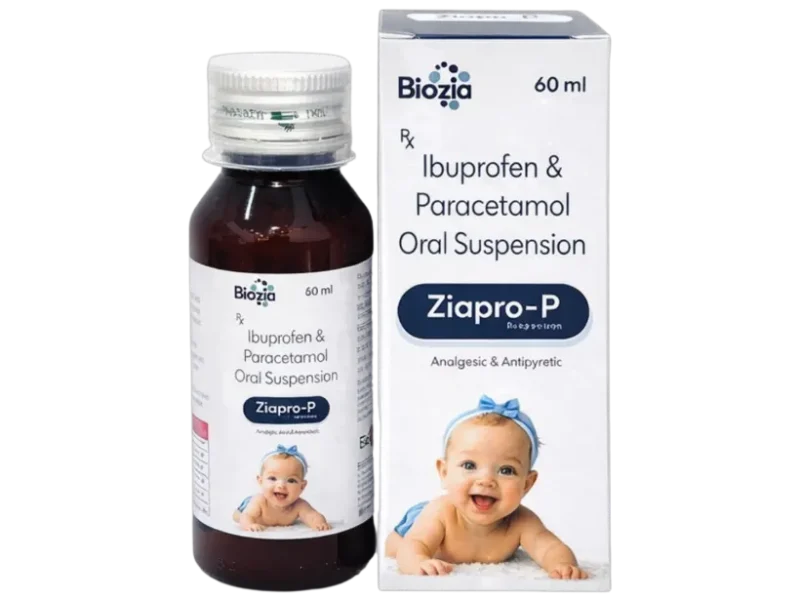
Ziapro-P Suspension
Ibuprofen 100mg + paracetamol 162.50mg
| Composition | Ibuprofen 100mg + paracetamol 162.50mg |
|---|---|
| Packing | 60ML |
| MRP | ₹ 60 |
| Dosage Form | Syrups & Suspensions |
About Ziapro-P Suspension
Ziapro-P Suspension contains Ibuprofen 100 mg and Paracetamol 162.5 mg, combining two of the most widely trusted medicines for pain and fever relief into a single suspension that provides enhanced comfort compared to either medicine used alone.
This combination suspension from Biozia is commonly used in children to bring down fever and relieve pain such as teething discomfort, earache, headache, and post-vaccination fever, offering complementary mechanisms for faster and more effective symptom relief.
Uses of Ziapro-P Suspension
This medicine is commonly used for:
- Fever reduction in children (pyrexia from various causes)
- Relief from mild to moderate pain including headache, earache, and toothache
- Post-vaccination fever and pain management
- Musculoskeletal pain and discomfort
- Pain and fever associated with cold and flu symptoms
Indications
Ibuprofen + Paracetamol combination is indicated for the management of mild to moderate pain and pyrexia in paediatric patients. Ibuprofen provides anti-inflammatory, analgesic, and antipyretic effects via COX inhibition; Paracetamol (acetaminophen) provides central analgesic and antipyretic effects through a complementary mechanism. The combination offers additive or synergistic analgesia and antipyresis, allowing effective symptom control at lower doses of each component.
How Ziapro-P Suspension Works
Ibuprofen reduces inflammation, pain, and fever by blocking the production of prostaglandins — chemicals the body releases that cause these symptoms. Paracetamol works primarily in the brain and spinal cord to reduce the perception of pain and lower fever through a different pathway. By combining both, Ziapro-P Suspension addresses fever and pain through two complementary mechanisms, providing more effective relief than either alone.
Mechanism of Action
Ibuprofen is a non-selective NSAID that reversibly inhibits cyclooxygenase enzymes (COX-1 and COX-2), reducing the synthesis of prostaglandins and thromboxane from arachidonic acid. This results in anti-inflammatory, analgesic, and antipyretic effects. Paracetamol's precise mechanism is not fully elucidated but is thought to involve inhibition of a central COX-3 isoform, modulation of the endocannabinoid system, and activation of descending serotonergic pain inhibitory pathways, with weak peripheral prostaglandin inhibition. The combination provides complementary central and peripheral antipyretic and analgesic effects.
Key Benefits
- Dual-mechanism pain and fever relief more effective than either medicine alone
- Suspension form allows precise paediatric dosing by weight or age as directed
- Both components are well-established and widely trusted medicines
- Reduces the need for alternating two separate medicines for fever management
Did You Know?
The combination of Ibuprofen and Paracetamol has been the subject of clinical research showing that together they can provide better fever and pain relief than either medicine alone, even at doses that are individually lower. This synergistic effect is why the combination is increasingly popular in paediatric care.
When & How to Take
Ziapro-P Suspension should be given as prescribed by your doctor. Shake the bottle well before each use. It is usually taken with or after food to reduce stomach upset. Do not exceed the prescribed dose or frequency.
Always follow the dosage and schedule advised by your doctor — this is general guidance only.
Possible Side Effects
Common side effects may include mild stomach upset, nausea, or vomiting. Ibuprofen may cause stomach irritation, so taking with food is recommended. These effects are usually mild and transient. Tell your doctor if any side effect is severe or persistent, including any signs of allergic reaction.
Precautions & Safety
- Always use the dose prescribed by your doctor — do not exceed the recommended amount
- Do not give to children below the age recommended by your doctor
- Inform your doctor about any history of asthma, kidney disease, or stomach ulcers before use
- Avoid use with other NSAID or paracetamol-containing products simultaneously to prevent accidental overdose
- Maintain adequate fluid intake, especially when the child has fever
Myths vs Facts
Paracetamol and Ibuprofen do the same thing, so combining them is redundant.
Although both reduce fever and pain, they work through different mechanisms. Ibuprofen works primarily through peripheral prostaglandin inhibition (anti-inflammatory), while Paracetamol acts mainly via central pathways. Their complementary actions make the combination more effective than either alone.
A higher dose of medicine will bring down fever faster.
Exceeding the prescribed dose does not improve or speed up fever reduction and significantly increases the risk of side effects, particularly liver effects with Paracetamol and stomach issues with Ibuprofen. Always follow the recommended dose.