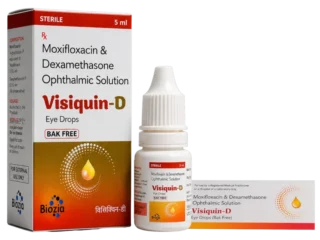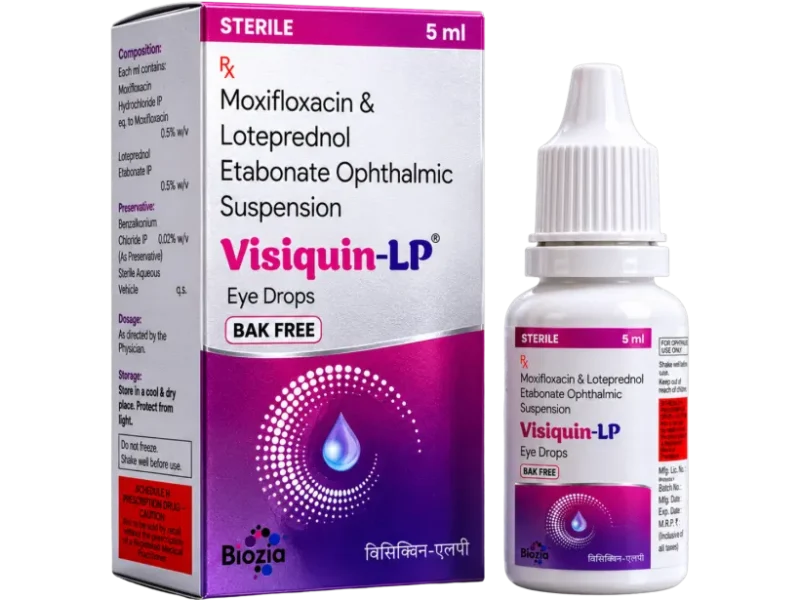
Visiquin-LP Eye Drop
Moxifloxacin 0.5% w/v + Loteprednol 0.5% w/v
| Composition | Moxifloxacin 0.5% w/v + Loteprednol 0.5% w/v |
|---|---|
| Packing | 5ml |
| MRP | ₹ 185 |
| Dosage Form | Eye Drops |
About Visiquin-LP Eye Drop
Visiquin-LP Eye Drop combines Moxifloxacin 0.5% w/v with Loteprednol 0.5% w/v — pairing a broad-spectrum fluoroquinolone antibiotic with a next-generation, ester-based topical corticosteroid. Loteprednol Etabonate is specifically designed for ophthalmic use with a metabolic deactivation mechanism that reduces the risks typically associated with conventional corticosteroids in the eye.
Visiquin-LP is prescribed when antibacterial and anti-inflammatory treatment is required together — particularly in post-surgical settings or inflammatory ocular conditions with bacterial involvement — while prioritising an improved corticosteroid safety profile.
Uses of Visiquin-LP Eye Drop
This medicine is commonly used for:
- Treating bacterial eye infections with significant associated inflammation
- Managing post-operative inflammation and infection risk after cataract surgery
- Treating blepharokeratoconjunctivitis with antibacterial and anti-inflammatory requirements
- Managing bacterial ocular surface infections with ocular surface inflammatory disease
- Providing combined infection and inflammation control in anterior segment conditions
Indications
Indicated for the treatment of ocular conditions requiring combined topical antibiotic and corticosteroid therapy. Moxifloxacin provides broad-spectrum antibacterial coverage; Loteprednol Etabonate 0.5% provides anti-inflammatory activity with a retrometabolic design that reduces the risk of steroid-induced IOP elevation and cataract formation compared to conventional corticosteroids such as dexamethasone or prednisolone, making it a preferred option in patients with risk factors for corticosteroid-related complications.
How Visiquin-LP Eye Drop Works
Moxifloxacin kills the bacteria responsible for the eye infection. Loteprednol is a special type of corticosteroid designed specifically for the eye — it reduces redness, swelling, and discomfort from inflammation, and then breaks down naturally into inactive substances within the body, reducing the risk of side effects typically associated with older steroid eye drops.
Mechanism of Action
Moxifloxacin inhibits bacterial DNA gyrase and topoisomerase IV, exerting bactericidal activity against a broad spectrum of Gram-positive and Gram-negative organisms. Loteprednol Etabonate is a C-20 ester-based retrometabolic corticosteroid designed to undergo predictable ester hydrolysis after topical activity, converting to inactive metabolites (Delta-1 cortienic acid etabonate) that are excreted without systemic steroid accumulation. It binds glucocorticoid receptors and suppresses inflammatory mediator transcription but is associated with a significantly lower incidence of IOP elevation and posterior subcapsular cataract formation compared to conventional ophthalmic corticosteroids.
Key Benefits
- Loteprednol's retrometabolic design provides anti-inflammatory efficacy with lower IOP-elevation risk than conventional steroids
- Broad-spectrum Moxifloxacin antibacterial coverage in the same drop
- Preferred for patients with glaucoma risk factors or those requiring longer post-operative courses
- Convenient single-drop combination reduces the number of separate medications required
Did You Know?
Loteprednol Etabonate was specifically designed using retrometabolic drug design — a strategy where the molecule is built to deactivate into inert metabolites after it has performed its therapeutic function. This is why Loteprednol has a fundamentally different safety profile from older ocular corticosteroids like Dexamethasone, particularly for intraocular pressure.
When & How to Take
Use Visiquin-LP Eye Drop exactly as directed by your ophthalmologist. Dosing frequency and duration will be determined by your surgeon or eye specialist based on your condition. Do not alter the prescribed regimen without consulting your doctor.
Always follow the dosage and schedule advised by your doctor — this is general guidance only.
Possible Side Effects
Mild stinging or discomfort after instillation may occur. Loteprednol has a reduced risk of IOP elevation compared to older corticosteroids, but IOP monitoring may still be recommended for extended courses. Blurred vision immediately after instillation is possible and resolves quickly. Tell your doctor if any side effect is severe or persistent.
Precautions & Safety
- Do not use if a viral or fungal eye infection is suspected — corticosteroids can worsen such infections
- Inform your doctor if you have glaucoma or a history of elevated intraocular pressure
- Do not use contact lenses during active eye infection treatment
- Avoid touching the dropper tip to any surface or the eye
- Complete the prescribed course and do not extend use beyond what your ophthalmologist has specified
Myths vs Facts
All steroid eye drops carry the same risk of raising eye pressure.
Loteprednol Etabonate is specifically designed to have a lower risk of IOP elevation due to its retrometabolic inactivation. This is why your ophthalmologist may choose Visiquin-LP over alternatives in patients with glaucoma risk factors.
If the eye looks and feels better, I can stop the drops early.
Both the antibiotic course and the anti-inflammatory course need to be completed as prescribed. Stopping early can lead to infection relapse or incomplete resolution of inflammation, which can affect surgical outcomes.