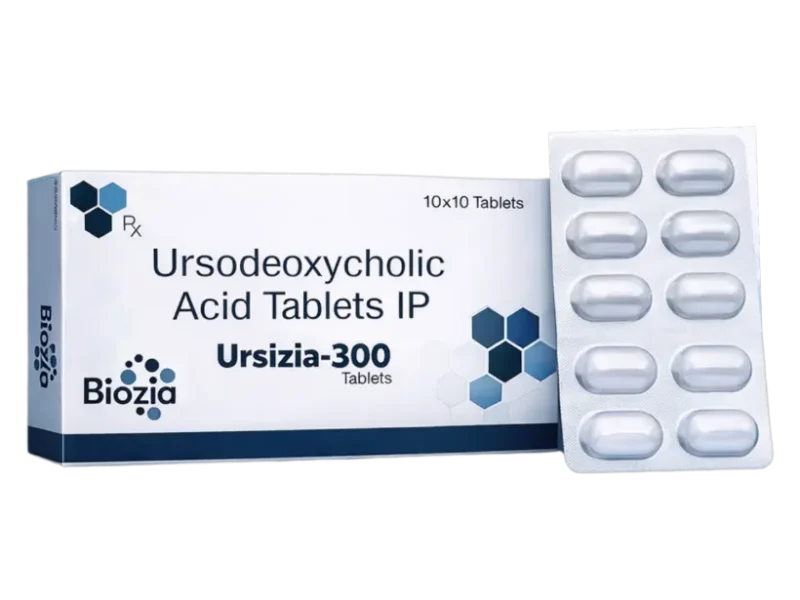
Ursizia-300 Tablet
Ursodeoxycholic Acid 300 mg
| Composition | Ursodeoxycholic Acid 300 mg |
|---|---|
| Packing | 10x10 Alu/Alu |
| MRP | ₹ 4000 |
| Dosage Form | Tablets |
About Ursizia-300 Tablet
Ursizia-300 is a tablet containing Ursodeoxycholic Acid (UDCA) 300 mg, a naturally occurring bile acid used to support liver health and treat certain bile-related conditions. It is prescribed to dissolve cholesterol gallstones in patients who are not candidates for surgery, and to treat chronic liver diseases affecting the bile ducts, such as primary biliary cholangitis.
Ursodeoxycholic Acid in Ursizia-300 works by modifying the composition of bile, reducing the cholesterol saturation that leads to gallstone formation, and protecting liver cells from the toxic effects of accumulated bile acids. It is a well-studied, evidence-based therapy for several hepatobiliary conditions.
Uses of Ursizia-300 Tablet
This medicine is commonly used for:
- Dissolving small to medium cholesterol gallstones (as an alternative to surgery)
- Treatment of primary biliary cholangitis (primary biliary cirrhosis)
- Management of intrahepatic cholestasis of pregnancy
- Liver protection in certain chronic liver diseases
- Improving liver enzyme levels in non-alcoholic fatty liver disease (as prescribed)
Indications
Ursodeoxycholic Acid 300 mg is indicated for: dissolution of radiolucent cholesterol gallstones in patients with functional gallbladders; treatment of primary biliary cholangitis (PBC) to slow disease progression and improve liver biochemistry; management of intrahepatic cholestasis of pregnancy; and as adjunct hepatoprotective therapy in select chronic cholestatic liver conditions. Evidence supports its use in improving aminotransferase and bilirubin levels in PBC and other cholestatic disorders.
How Ursizia-300 Tablet Works
Ursodeoxycholic Acid in Ursizia-300 changes the composition of bile to make it less saturated with cholesterol. This helps cholesterol stones slowly dissolve over time and prevents new ones from forming. In liver disease, it replaces more toxic bile acids that damage liver cells, reducing inflammation and protecting the liver. It also helps bile flow more freely through the bile ducts.
Mechanism of Action
Ursodeoxycholic Acid (UDCA) reduces biliary cholesterol saturation by inhibiting HMG-CoA reductase activity (reducing hepatic cholesterol synthesis) and decreasing intestinal cholesterol absorption, progressively dissolving cholesterol monohydrate crystals in gallstones. In cholestatic liver disease, UDCA displaces hydrophobic, cytotoxic bile acids from the bile acid pool, reducing their hepatotoxic and apoptotic effects on cholangiocytes and hepatocytes. UDCA also stimulates bicarbonate-rich choleresis, stabilises hepatocellular membranes, modulates immune responses in the liver, and activates PI3K/Akt cytoprotective signalling pathways, collectively slowing progression of cholestatic liver injury.
Key Benefits
- Can dissolve cholesterol gallstones without surgery in appropriate patients
- Slows progression of primary biliary cholangitis and improves liver enzymes
- Hepatoprotective — protects liver cells from bile acid-induced damage
- Well-tolerated long-term therapy with a favourable safety profile
Did You Know?
Ursodeoxycholic Acid was originally isolated from bear bile, which has been used in traditional Asian medicine for centuries. Scientists identified it as the key active compound and developed a synthetic pharmaceutical-grade version that is now produced without any animal source.
When & How to Take
Ursizia-300 is typically taken with meals or at bedtime (especially for gallstone dissolution), for the duration prescribed by your doctor — treatment for gallstones and liver conditions is often long-term. Never alter the dose or stop without your doctor's guidance.
Always follow the dosage and schedule advised by your doctor — this is general guidance only.
Possible Side Effects
Ursizia-300 is generally well-tolerated. Some people may experience diarrhoea, nausea, or stomach discomfort, especially at the start of treatment. A temporary worsening of liver enzyme values may rarely occur at initiation. Tell your doctor if any side effect is severe or persistent.
Precautions & Safety
- Not suitable for dissolution of calcified (radio-opaque), pigment, or large gallstones
- Inform your doctor if you have inflammatory bowel disease or significant liver dysfunction beyond cholestasis
- Regular liver function tests and gallbladder imaging may be needed during treatment
- Consult your doctor before use in pregnancy — intrahepatic cholestasis of pregnancy is a specific indication requiring medical supervision
- Do not stop treatment without consulting your doctor, as gallstones can reform
Myths vs Facts
UDCA tablets can dissolve any type of gallstone quickly.
Ursodeoxycholic Acid only dissolves cholesterol gallstones and is most effective for small, non-calcified stones. Pigment stones and calcified stones do not respond to UDCA. The dissolution process typically takes months to years.
Once the gallstones dissolve, no further treatment or monitoring is needed.
Gallstones can reform after UDCA treatment is stopped. Your doctor may recommend continued maintenance therapy or periodic monitoring to assess recurrence risk.