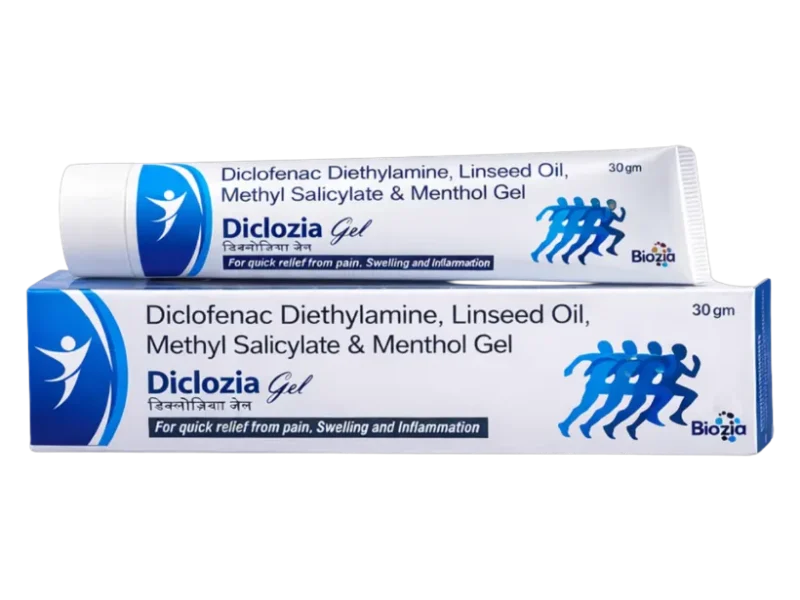
Diclozia-Gel
Diclofenac Diethylamine 1.16% Eq. to Diclofenac Sodium 1% + Methyl Salicylate 10% + Oleum Lini 3% + Menthol 5% + Benzyl Alcohol 1% w/v
| Composition | Diclofenac Diethylamine 1.16% Eq. to Diclofenac Sodium 1% + Methyl Salicylate 10% + Oleum Lini 3% + Menthol 5% + Benzyl Alcohol 1% w/v |
|---|---|
| Packing | 30 gm |
| MRP | ₹ 145 |
| Dosage Form | Topical |
About Diclozia-Gel
Diclozia-Gel is a topical analgesic and anti-inflammatory gel containing Diclofenac Diethylamine 1.16% (equivalent to Diclofenac Sodium 1%), Methyl Salicylate 10%, Oleum Lini (Linseed Oil) 3%, Menthol 5%, and Benzyl Alcohol 1% — a well-established combination for localised pain and inflammation relief. Diclozia-Gel is applied directly to the affected area, delivering the active ingredients precisely where relief is needed.
Designed for everyday musculoskeletal pain management, Diclozia-Gel combines the anti-inflammatory power of diclofenac with the time-tested soothing counter-irritant properties of methyl salicylate and menthol. The smooth gel formulation absorbs quickly and is suitable for regular use on joints, muscles, and soft tissue injuries as directed by a doctor.
Uses of Diclozia-Gel
This medicine is commonly used for:
- Relief from joint pain including arthritis-related discomfort
- Muscle aches, soreness, and fatigue
- Backache, neck pain, and shoulder stiffness
- Sports injuries, sprains, and strains
- Soft tissue inflammation including tendinitis and bursitis
Indications
Diclofenac Diethylamine 1.16% topical gel is indicated for the local symptomatic relief of acute and chronic musculoskeletal pain and inflammation, including soft tissue injury (sprains, strains), arthralgia, low back pain, periarticular disorders (tendinitis, bursitis), and minor sports injuries. The inclusion of methyl salicylate and menthol adds counter-irritant analgesia to complement the pharmacological NSAID action of diclofenac.
How Diclozia-Gel Works
Diclozia-Gel works through a dual mechanism — the diclofenac component is absorbed through the skin to reduce inflammation and pain in the underlying tissues by blocking the body's production of inflammatory chemicals. The methyl salicylate and menthol provide additional immediate soothing relief through warmth and cooling sensations that help override pain signals from the affected area.
Mechanism of Action
Diclofenac diethylamine is a prodrug ester of diclofenac sodium with enhanced lipophilicity, facilitating superior percutaneous absorption. Diclofenac inhibits both COX-1 and COX-2 isoforms of cyclooxygenase, blocking the conversion of arachidonic acid to prostaglandins (PGE2, PGI2) and thromboxanes, thereby reducing local inflammation, oedema, and nociception. Methyl salicylate penetrates the skin and provides additional salicylate-mediated COX inhibition and counter-irritation via TRPV1 receptor stimulation. Menthol activates TRPM8 (cold receptors) in cutaneous sensory neurons, producing analgesia through gating of cold-sensitive afferents and modulating pain transmission via the lateral spino-thalamic pathway. Linseed oil (Oleum Lini) acts as a skin-conditioning emollient and permeation enhancer.
Key Benefits
- Provides dual analgesic action — anti-inflammatory NSAID effect from diclofenac plus counter-irritant relief from menthol and methyl salicylate
- Topical application targets pain at the source with minimal systemic side effects
- Quick-absorbing, non-greasy gel texture for comfortable daily use
- Effective for a broad range of musculoskeletal pain conditions from sports injuries to chronic joint pain
Did You Know?
The diethylamine salt form of diclofenac used in gels like Diclozia-Gel was specifically developed because it is more fat-soluble than diclofenac sodium, allowing it to cross the skin barrier more efficiently. This improved skin penetration is what makes the topical gel an effective alternative to oral anti-inflammatory tablets for localised pain.
When & How to Take
Diclozia-Gel is for external use only. Apply a thin layer to the painful area and massage gently until absorbed. Use as prescribed by your doctor, typically 3–4 times a day. Wash your hands after each application. Avoid contact with eyes and mucous membranes.
Always follow the dosage and schedule advised by your doctor — this is general guidance only.
Possible Side Effects
Skin reactions such as mild redness, burning, itching, or dryness at the application site may occasionally occur. In rare cases, a localised allergic rash may develop. With proper use, systemic NSAID side effects are uncommon. Tell your doctor if any side effect is severe or persistent.
Precautions & Safety
- For external use only — keep away from eyes, nose, mouth, and broken or irritated skin
- Do not apply under occlusive dressings without medical advice
- Inform your doctor if you have known hypersensitivity to diclofenac, aspirin, or other NSAIDs
- Avoid use over large skin areas or for extended periods without a doctor's guidance
- Consult a doctor before use if you are pregnant or breastfeeding
- Keep out of reach of children
Myths vs Facts
Topical pain gels only work on the surface and cannot help with deep joint pain.
Diclofenac in topical gels has been demonstrated in clinical studies to penetrate through skin, subcutaneous tissue, and reach synovial fluid in joints, providing real anti-inflammatory benefit deep in affected tissues.
Since a gel is applied to the skin, it cannot cause any internal side effects.
While systemic absorption from topical diclofenac gel is much lower than from oral tablets, some systemic absorption does occur — especially with excessive or widespread use. Individuals with kidney, liver, or cardiovascular conditions should consult their doctor before using topical NSAIDs.