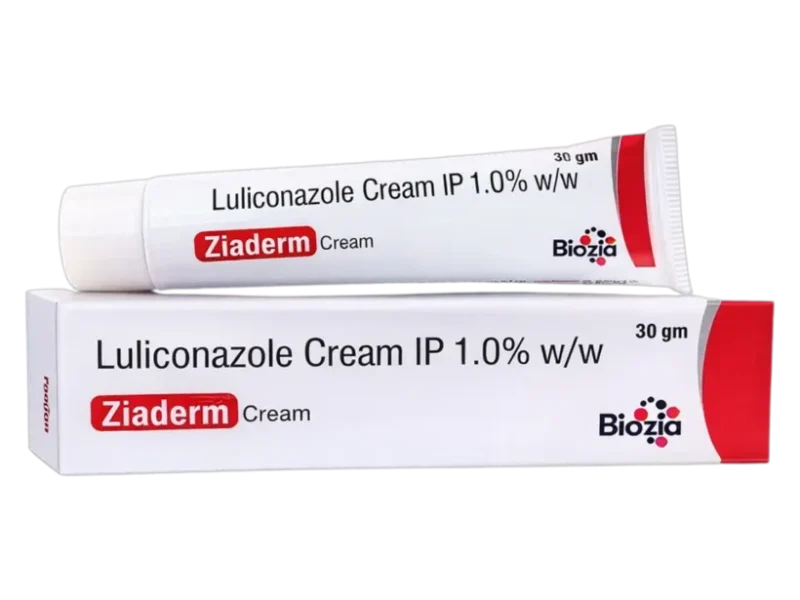
Ziaderm Cream
Luliconazole Cream 1.0% w/w
| Composition | Luliconazole Cream 1.0% w/w |
|---|---|
| Packing | 30gm |
| MRP | ₹ 370 |
| Dosage Form | Topical |
About Ziaderm Cream
Ziaderm Cream is a topical antifungal preparation containing Luliconazole 1.0% w/w. Luliconazole is a next-generation imidazole antifungal known for its broad-spectrum activity and high potency against dermatophytes — the fungi most commonly responsible for ringworm, athlete's foot, and similar skin infections.
Ziaderm Cream is applied directly to the affected skin and is valued for its once-daily dosing and strong efficacy against persistent or recurrent fungal skin infections.
Uses of Ziaderm Cream
This medicine is commonly used for:
- Treating ringworm (tinea corporis) — fungal infection causing ring-shaped patches on the body
- Managing athlete's foot (tinea pedis) — fungal infection between the toes
- Treating jock itch (tinea cruris) — fungal infection in the groin area
- Managing tinea versicolor (patchy skin discolouration caused by yeast)
- Treating other superficial dermatophyte infections of the skin
Indications
Luliconazole 1% cream is indicated for topical treatment of tinea pedis, tinea cruris, tinea corporis, and tinea versicolor caused by susceptible dermatophytes including Trichophyton rubrum, Trichophyton mentagrophytes, Microsporum canis, and Malassezia species. Its high potency and low MIC values allow for a shorter treatment duration compared to older azole antifungals.
How Ziaderm Cream Works
Luliconazole works by disrupting the outer membrane of fungal cells. It blocks the production of a vital substance called ergosterol that fungi need to build and maintain their cell walls. Without ergosterol, the fungal cell membrane becomes leaky and unstable, and the fungus cannot survive.
Mechanism of Action
Luliconazole is a novel imidazole antifungal that inhibits fungal cytochrome P450-dependent lanosterol 14-alpha-demethylase (CYP51) with considerably higher potency than older imidazoles such as ketoconazole and clotrimazole. This inhibition depletes ergosterol from the fungal cell membrane, causing altered membrane permeability, disruption of membrane-associated enzyme activity, and ultimately fungal cell death. Luliconazole demonstrates high affinity for CYP51 and exceptional keratin binding, resulting in prolonged skin retention.
Key Benefits
- Next-generation imidazole with superior potency against dermatophytes compared to older antifungals
- Once-daily application makes treatment convenient and easy to follow
- High keratin-binding ensures it remains active in the skin for extended periods
- Effective against a wide range of fungal species responsible for common skin infections
Did You Know?
Luliconazole has one of the lowest minimum inhibitory concentrations (MICs) among all topical antifungals currently available, meaning it is effective at very small amounts against the fungi that cause ringworm — which is why it often works with shorter treatment courses than older creams.
When & How to Take
Apply Ziaderm Cream to the affected area and a small margin of surrounding healthy skin, as directed by your doctor, typically once daily. Continue for the full prescribed duration even if symptoms improve earlier. Wash and dry the area thoroughly before application.
Always follow the dosage and schedule advised by your doctor — this is general guidance only.
Possible Side Effects
Luliconazole cream is generally well tolerated. Some people may experience mild application-site reactions such as redness, itching, or a burning sensation, particularly at the start of treatment. These are usually transient and resolve on their own. Tell your doctor if any side effect is severe or persistent.
Precautions & Safety
- For external use only — avoid contact with eyes, mouth, and mucous membranes
- Keep the affected area clean and dry — fungi thrive in warm, moist environments
- Complete the full course as prescribed even if the infection looks cleared
- Do not share towels or footwear during treatment to avoid spreading the infection
- Inform your doctor if you are pregnant or breastfeeding
Myths vs Facts
Fungal skin infections disappear quickly and do not need a full course of antifungal cream.
Symptoms like itching and redness may improve quickly, but the fungus can still be present in the skin. Stopping treatment early is the most common reason for recurrence — completing the full prescribed course is essential.
Ringworm is caused by a worm.
Despite its name, ringworm (tinea) has nothing to do with worms. It is a fungal infection of the skin that creates ring-shaped, scaly patches. Antifungal creams like Ziaderm are the correct treatment.