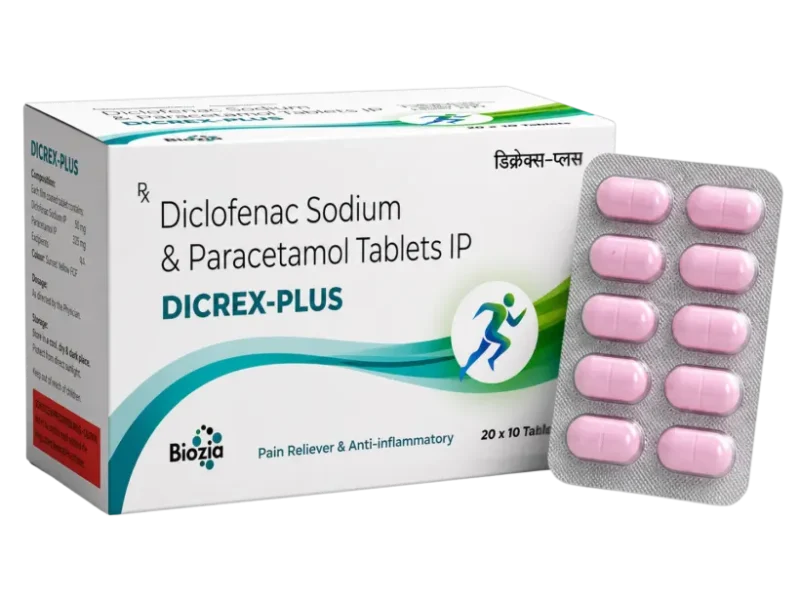
Dicrex- Plus Tablet
Diclofenac Potassium 50 mg + Paracetamol 325 mg
| Composition | Diclofenac Potassium 50 mg + Paracetamol 325 mg |
|---|---|
| Packing | 20x10 Blister |
| MRP | ₹ 400 |
| Dosage Form | Tablets |
About Dicrex- Plus Tablet
Dicrex-Plus Tablet contains Diclofenac Potassium 50 mg and Paracetamol 325 mg — a well-established combination of an NSAID and a central analgesic that together provide more effective pain and inflammation relief than either drug alone. Diclofenac potassium is known for its rapid onset of action, while paracetamol adds complementary analgesic coverage through a different mechanism.
Offered by Biozia Lifesciences, Dicrex-Plus is suitable for adults who need effective relief from moderate pain with an inflammatory component — such as dental pain, post-operative discomfort, musculoskeletal conditions, and painful menstrual periods. The combination approach maximises pain control while keeping individual drug doses moderate.
Uses of Dicrex- Plus Tablet
This medicine is commonly used for:
- Relieving moderate to severe pain with an inflammatory component
- Managing dental pain and post-dental procedure discomfort
- Treating musculoskeletal pain, backache, and joint pain
- Providing relief from painful menstrual periods (dysmenorrhoea)
- Managing post-operative pain under medical supervision
Indications
The combination of Diclofenac Potassium 50 mg and Paracetamol 325 mg is indicated for the short-term management of moderate pain with an inflammatory component, including dental pain, post-traumatic pain, primary dysmenorrhoea, acute musculoskeletal pain (myalgia, arthralgia, back pain, sprains), and post-operative analgesia as an adjunct to opioid-sparing regimens.
How Dicrex- Plus Tablet Works
Dicrex-Plus uses two pain-fighting ingredients that work through different pathways for better overall relief. Diclofenac potassium reduces the production of inflammation-causing chemicals (prostaglandins) in the body, which is why it is particularly useful for pain that comes with swelling or inflammation. Paracetamol acts in the brain to lower the perception of pain and reduce fever. Together, they provide relief that is greater than either ingredient on its own.
Mechanism of Action
Diclofenac potassium is a phenylacetic acid NSAID that non-selectively inhibits COX-1 and COX-2 cyclooxygenase enzymes, suppressing peripheral prostaglandin E2 and thromboxane A2 synthesis, reducing neuronal sensitisation at the site of inflammation. As the potassium salt, it is formulated for rapid dissolution and faster peak plasma concentrations compared to sodium salt formulations. Paracetamol exerts analgesia and antipyresis via central inhibition of prostaglandin synthesis and modulation of the endocannabinoid and serotonergic systems, acting synergistically with diclofenac's peripheral mechanism to broaden analgesic coverage.
Key Benefits
- Dual mechanism of action provides more comprehensive pain relief than a single analgesic alone
- Diclofenac potassium salt formulation has a faster onset, offering quicker relief
- Particularly effective for inflammatory pain conditions like joint pain, dental pain, and dysmenorrhoea
- Moderate individual doses in the combination reduce the risk of side effects compared to higher doses of a single drug
Did You Know?
Diclofenac potassium is absorbed significantly faster than diclofenac sodium — reaching peak blood levels in as little as 30 to 60 minutes — making the potassium salt formulation especially useful for conditions like acute pain and dysmenorrhoea where fast relief is important.
When & How to Take
Take Dicrex-Plus as directed by your doctor, preferably with or after food to minimise the risk of stomach irritation from diclofenac. Do not take more than the prescribed amount and avoid combining with other NSAIDs or paracetamol-containing products. It is generally recommended for short-term use as directed by your doctor.
Always follow the dosage and schedule advised by your doctor — this is general guidance only.
Possible Side Effects
The most common side effects include stomach discomfort, heartburn, nausea, or indigestion. Some patients may experience dizziness or headache. Rarely, diclofenac can cause gastric irritation or allergic skin reactions. Long-term use at high doses should be avoided as it may affect the stomach lining, kidneys, or liver. Tell your doctor if any side effect is severe or persistent.
Precautions & Safety
- Always take with food or a glass of milk to protect the stomach from NSAID-related irritation
- Inform your doctor if you have a history of peptic ulcer, stomach bleeding, kidney disease, or liver problems
- Avoid taking additional NSAIDs or aspirin alongside this medicine
- Do not exceed the recommended dose or duration of use — NSAIDs are intended for short-term pain management
- Consult your doctor before use during pregnancy, especially from the third trimester onwards
Myths vs Facts
Diclofenac and paracetamol together are too strong and dangerous to use together.
The combination of diclofenac and paracetamol is a well-established, evidence-based pain regimen used worldwide. The two drugs act through different mechanisms, and using them together at appropriate prescribed doses is both safe and more effective than using either alone.
NSAIDs like diclofenac always cause stomach ulcers.
Not everyone who takes an NSAID develops stomach problems. The risk is higher with long-term, high-dose use on an empty stomach. Taking this medicine with food and using it only as long as prescribed significantly reduces this risk.