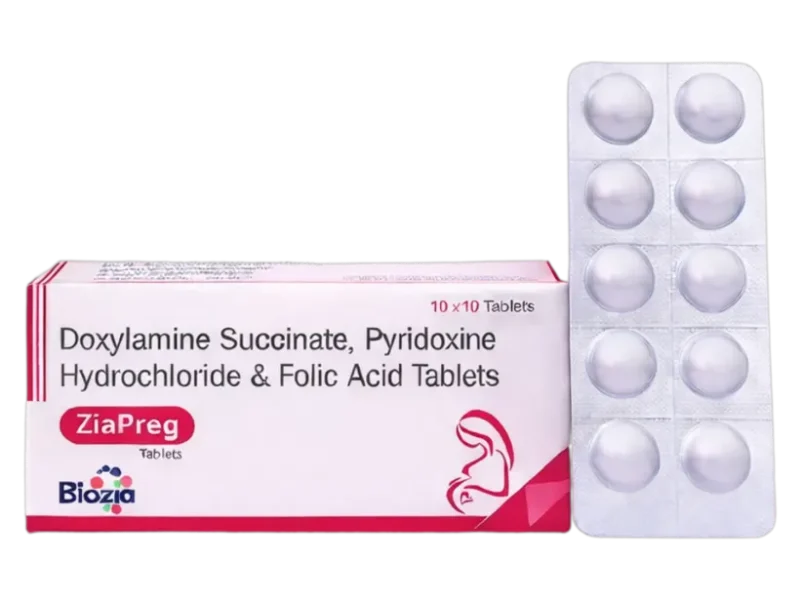
ZiaPreg Tablet
Doxylamine Succinate 20 mg + Pyridoxine Hcl 20 mg + Folic Acid 5 mg
| Composition | Doxylamine Succinate 20 mg + Pyridoxine Hcl 20 mg + Folic Acid 5 mg |
|---|---|
| Packing | 10x10 Alu/Alu |
| MRP | ₹ 850 |
| Dosage Form | Tablets |
About ZiaPreg Tablet
ZiaPreg Tablet is a specially formulated combination of Doxylamine Succinate 20 mg, Pyridoxine HCl (Vitamin B6) 20 mg, and Folic Acid 5 mg — designed to address nausea and vomiting of pregnancy (morning sickness) while also providing critical nutritional support for foetal neural development.
This combination is a well-recognised, clinically studied option for managing morning sickness safely during pregnancy, balancing comfort for the mother with protection for the developing baby.
Uses of ZiaPreg Tablet
This medicine is commonly used for:
- Nausea and vomiting during pregnancy (morning sickness)
- Prevention and management of severe pregnancy-related nausea
- Supporting Folic Acid intake during early pregnancy for neural tube protection
- Nutritional support during the first trimester when dietary intake may be reduced
Indications
The combination of Doxylamine Succinate and Pyridoxine is indicated for the management of nausea and vomiting of pregnancy (NVP) not responding to conservative management. Folic Acid 5 mg is indicated for prevention of neural tube defects and supplementation in women of childbearing potential. This combined formulation addresses both the symptomatic and nutritional needs of early pregnancy.
How ZiaPreg Tablet Works
Doxylamine is a safe antihistamine that reduces nausea signals in the brain. Pyridoxine (Vitamin B6) has been shown to independently help reduce pregnancy-related nausea and supports healthy nerve and metabolic function. Folic Acid is a vital B-vitamin that the developing baby needs for proper formation of the neural tube — the structure that becomes the brain and spine.
Mechanism of Action
Doxylamine Succinate acts as an H1-receptor antagonist and anticholinergic agent, suppressing vestibular and chemoreceptor trigger zone (CTZ) inputs that mediate nausea and vomiting. Pyridoxine (Vitamin B6) serves as a cofactor in amino acid metabolism and neurotransmitter synthesis; its anti-emetic mechanism in NVP is not fully elucidated but is thought to involve modulation of neurotransmitter pathways related to nausea. Folic Acid is reduced to tetrahydrofolate, which participates in one-carbon transfer reactions essential for de novo purine and thymidylate synthesis — critical for rapid cell division during foetal neural tube closure.
Key Benefits
- Clinically recognised relief from nausea and vomiting of pregnancy
- Folic Acid supports foetal neural tube development, reducing the risk of spina bifida
- Combines symptomatic relief with essential nutritional support in one tablet
- Doxylamine is one of the most studied antihistamines in pregnancy
Did You Know?
Folic Acid supplementation before and during early pregnancy can reduce the risk of neural tube defects such as spina bifida by up to 70% — which is why health organisations worldwide recommend it for all women planning a pregnancy.
When & How to Take
ZiaPreg Tablet is often prescribed to be taken at bedtime to take advantage of Doxylamine's sedative properties and reduce daytime drowsiness. Follow your gynaecologist's specific instructions for timing and duration.
Always follow the dosage and schedule advised by your doctor — this is general guidance only.
Possible Side Effects
The most common side effect is drowsiness, mainly from the Doxylamine component. Dry mouth or mild constipation may also occur. These are generally manageable. Tell your doctor if any side effect is severe or persistent.
Precautions & Safety
- Avoid driving or operating machinery due to the drowsiness caused by Doxylamine
- Avoid alcohol during treatment
- Inform your doctor if you have any respiratory conditions such as asthma or enlarged prostate, as anticholinergics require caution
- This tablet is specifically for use under obstetric guidance during pregnancy — do not self-medicate
- Tell your doctor about all other vitamins and supplements you are taking to avoid duplicating Folic Acid intake
Myths vs Facts
Morning sickness always goes away on its own and doesn't need treatment.
While mild nausea often improves on its own by the second trimester, severe or persistent nausea and vomiting (hyperemesis gravidarum) can lead to dehydration and nutritional deficiency. Safe and effective treatment like ZiaPreg can significantly improve quality of life and pregnancy outcomes.
Antihistamines are unsafe during pregnancy.
Doxylamine has been studied extensively in pregnancy and is considered safe at recommended doses. It has been used for decades in clinically studied formulations specifically for pregnancy-related nausea.