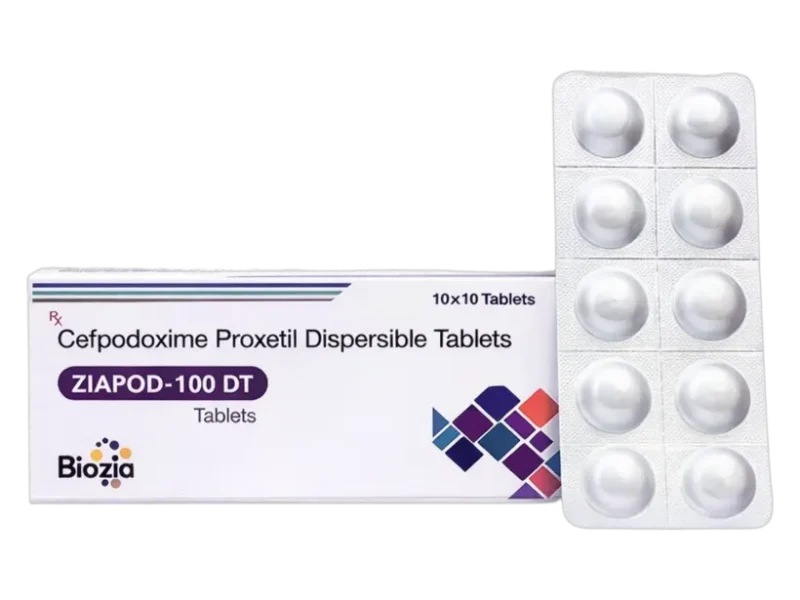
Ziapod-100 DT Tablet
Cefpodoxime 100 mg (Dispersible Tabletlet)
| Composition | Cefpodoxime 100 mg (Dispersible Tabletlet) |
|---|---|
| Packing | 10x10 Alu/Alu |
| MRP | ₹ 1200 |
| Dosage Form | Tablets |
About Ziapod-100 DT Tablet
Ziapod-100 DT Tablet is a dispersible formulation of Cefpodoxime 100 mg, a third-generation oral cephalosporin antibiotic that is highly effective against a broad range of bacterial infections.
The dispersible (DT) form makes it particularly convenient for patients who have difficulty swallowing tablets — it can be dissolved in water before taking, ensuring accurate dosing and ease of administration.
Uses of Ziapod-100 DT Tablet
This medicine is commonly used for:
- Chest infections and community-acquired pneumonia
- Throat and tonsil infections (pharyngitis/tonsillitis)
- Ear infections (otitis media)
- Urinary tract infections (UTIs)
- Skin and soft tissue infections
Indications
Cefpodoxime 100 mg is indicated for the treatment of mild to moderate infections caused by susceptible organisms, including acute otitis media, pharyngitis/tonsillitis caused by Streptococcus pyogenes, community-acquired pneumonia, uncomplicated urinary tract infections, and uncomplicated skin and skin-structure infections. It is active against many beta-lactamase-producing strains.
How Ziapod-100 DT Tablet Works
Cefpodoxime works by targeting and destroying the cell wall of bacteria. Without an intact cell wall, bacteria cannot survive or multiply. As a cephalosporin, it is effective against a wide range of bacteria that cause common infections.
Mechanism of Action
Cefpodoxime is an orally administered prodrug (Cefpodoxime proxetil) that is hydrolysed in the intestinal wall to the active compound Cefpodoxime. It inhibits bacterial cell wall synthesis by binding to and inactivating penicillin-binding proteins (PBPs), thereby blocking transpeptidation and peptidoglycan cross-linking. This results in cell lysis and death of susceptible organisms. It demonstrates stability against many beta-lactamases, broadening its clinical spectrum.
Key Benefits
- Effective against a wide range of common bacterial pathogens
- Dispersible tablet form enables easy dissolution in water for convenient administration
- Good oral bioavailability for reliable treatment of infections
- Stability against many beta-lactamases extends its spectrum of activity
Did You Know?
Cefpodoxime proxetil is a prodrug — the tablet itself is not the active antibiotic. It is converted into the active Cefpodoxime compound by enzymes in the gut wall during absorption, which is what gives it its antibacterial effect.
When & How to Take
Ziapod-100 DT Tablet should be dissolved in the recommended amount of water before swallowing and is best taken with food to improve absorption. Complete the full prescribed course even if you feel better, as directed by your doctor.
Always follow the dosage and schedule advised by your doctor — this is general guidance only.
Possible Side Effects
Common side effects include nausea, diarrhoea, abdominal pain, or headache. Some patients may experience a mild skin rash. Allergic reactions are rare but possible in individuals sensitive to cephalosporins or penicillins. Tell your doctor if any side effect is severe or persistent.
Precautions & Safety
- Complete the full prescribed course of antibiotics — stopping early can lead to antibiotic resistance
- Inform your doctor of any known allergy to penicillins or cephalosporins before taking this tablet
- Take with food for better absorption and to reduce stomach upset
- Do not share antibiotics with others or use leftover antibiotics for a different illness
- Inform your doctor if you are pregnant, breastfeeding, or have kidney disease
Myths vs Facts
You can stop antibiotics once you feel better.
Even when symptoms resolve, bacteria may not be fully eliminated. Stopping early can allow resistant bacteria to survive and cause a relapse or contribute to antibiotic resistance in the community.
Cefpodoxime works for viral infections like colds and flu.
Antibiotics including cephalosporins only work against bacterial infections. Colds, influenza, and most sore throats are viral and do not respond to antibiotics.