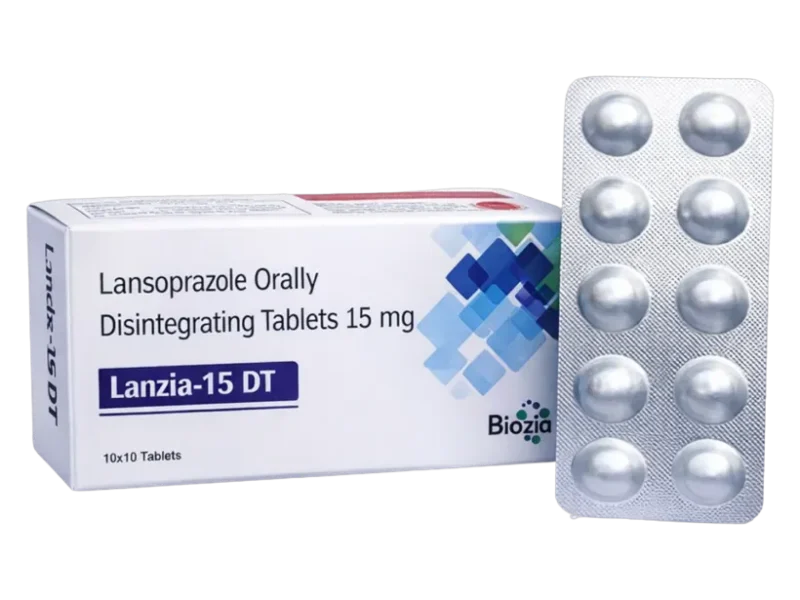
Lanzia-15 DT Tablet
Lansoprazole 15 mg (Orally Disintegrating Tablet)
| Composition | Lansoprazole 15 mg (Orally Disintegrating Tablet) |
|---|---|
| Packing | 10x10 Alu/Alu |
| MRP | ₹ 750 |
| Dosage Form | Tablets |
About Lanzia-15 DT Tablet
Lanzia-15 DT Tablet is an Orally Disintegrating Tablet (ODT) containing Lansoprazole 15 mg — a proton pump inhibitor (PPI) that powerfully reduces the production of acid in the stomach. The orally disintegrating formulation dissolves on the tongue without water, making it especially convenient for patients who have difficulty swallowing, elderly patients, or those who need a quick and hassle-free way to take their acid-suppression medication.
Available from Biozia Lifesciences, Lanzia-15 DT is used for conditions ranging from gastroesophageal reflux disease (GERD) to peptic ulcers and dyspepsia. The 15 mg strength is ideal for maintenance therapy and milder acid-related symptoms where a full 30 mg dose may not be required.
Uses of Lanzia-15 DT Tablet
This medicine is commonly used for:
- Treating heartburn and acid reflux (GERD — gastroesophageal reflux disease)
- Managing peptic ulcers including gastric and duodenal ulcers
- Relieving symptoms of indigestion, bloating, and acidity
- Protecting the stomach lining in patients taking NSAIDs long-term
- Maintenance treatment to prevent recurrence of healed ulcers
Indications
Lansoprazole 15 mg is indicated for the maintenance treatment of healed erosive oesophagitis, symptomatic GERD, mild to moderate acid-related dyspepsia, and as a prophylactic agent against NSAID-induced gastric ulcers in patients requiring long-term NSAID therapy. At 15 mg, it is used primarily for maintenance dosing and milder acid-related conditions where lower acid suppression is sufficient.
How Lanzia-15 DT Tablet Works
Your stomach lining has tiny pumps (proton pumps) that produce stomach acid. In conditions like GERD or peptic ulcers, too much acid irritates the food pipe or stomach lining, causing pain and damage. Lansoprazole in Lanzia-15 DT blocks these pumps directly, dramatically reducing acid production. With less acid, the irritated tissue heals and symptoms like heartburn and indigestion subside. The ODT formulation dissolves on the tongue — no water needed.
Mechanism of Action
Lansoprazole is a substituted benzimidazole PPI prodrug that is activated in the acidic environment of the gastric parietal cell canaliculus. Once activated, it forms a covalent disulfide bond with cysteine residues on the H+/K+ ATPase (proton pump), irreversibly inhibiting the final step of gastric acid secretion. This produces profound, sustained inhibition of both basal and stimulated acid output. New acid secretion depends on synthesis of new proton pumps, giving lansoprazole an effect duration longer than its plasma half-life. The ODT formulation utilises taste-masked enteric-coated microgranules that disintegrate rapidly on the tongue.
Key Benefits
- Orally disintegrating formulation — dissolves on the tongue without water for maximum convenience
- Potent acid suppression providing relief from heartburn, regurgitation, and ulcer pain
- Lower 15 mg strength is appropriate for maintenance therapy, minimising the risk of over-suppression
- Helps heal and protect the stomach and oesophageal lining from acid damage
Did You Know?
PPIs like lansoprazole are among the most prescribed medicines worldwide — but they work best when taken before eating, not during or after, because the proton pumps are most active in the presence of food. Taking your Lanzia-15 DT about 30 minutes before your first meal of the day maximises its effectiveness.
When & How to Take
Lanzia-15 DT is typically taken before a meal (usually breakfast), as directed by your doctor. Place the tablet on the tongue and let it dissolve — do not chew or swallow whole. Do not take antacids at the same time. Always follow your doctor's prescribed schedule and duration.
Always follow the dosage and schedule advised by your doctor — this is general guidance only.
Possible Side Effects
Lansoprazole is generally well tolerated. Some patients may experience headache, nausea, diarrhoea, or abdominal discomfort. Long-term continuous use of PPIs at high doses has been associated with low magnesium levels, reduced vitamin B12 absorption, and a small increase in the risk of bone fractures — discuss long-term use with your doctor. Tell your doctor if any side effect is severe or persistent.
Precautions & Safety
- Inform your doctor if you are taking medicines such as warfarin, clopidogrel, methotrexate, or antifungals, as lansoprazole may interact with these
- Long-term PPI use should be under regular medical review — periodic reassessment of the need for acid suppression is recommended
- Inform your doctor if you experience unexplained weight loss, difficulty swallowing, or blood in vomit or stool — these need investigation before starting PPI therapy
- Magnesium levels should be checked periodically during prolonged PPI use as hypomagnesaemia can occur
- Consult your doctor before using during pregnancy or breastfeeding
Myths vs Facts
Antacids and PPIs do the same thing, so they can be freely substituted.
Antacids neutralise acid that is already present in the stomach, providing quick but short-lived relief. PPIs like lansoprazole block the production of acid at the source, providing sustained relief. They work differently and serve different purposes — PPIs are used for longer-term management, not just quick relief.
Once heartburn is relieved, you can stop the PPI immediately.
Stopping acid-suppression therapy too soon can allow the underlying condition (like GERD or ulcers) to relapse. Always complete the course your doctor prescribes. For maintenance therapy, stopping abruptly can sometimes cause a temporary rebound increase in acid production.