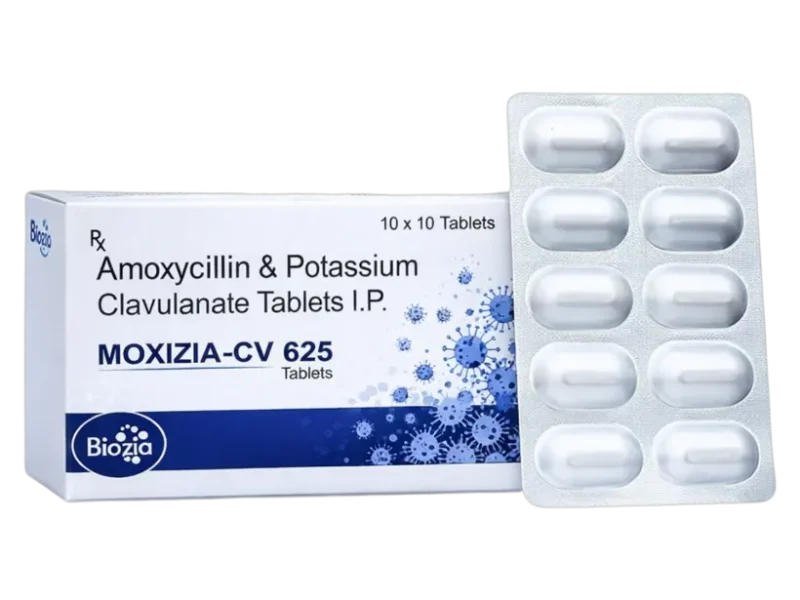
Moxizia-CV 625 Tablet
Amoxycillin 500 mg + Clavulanic Acid 125 mg
| Composition | Amoxycillin 500 mg + Clavulanic Acid 125 mg |
|---|---|
| Packing | 10x10 Alu/Alu |
| MRP | ₹ 1955 |
| Dosage Form | Tablets |
About Moxizia-CV 625 Tablet
Moxizia-CV 625 Tablet combines Amoxycillin 500 mg with Clavulanic Acid 125 mg — a widely prescribed and well-established antibiotic combination. Amoxycillin provides broad antibacterial coverage, while clavulanic acid protects it from destruction by beta-lactamase enzymes that many bacteria produce as a defence mechanism. Together, they restore and extend the activity of amoxycillin against beta-lactamase-producing resistant organisms.
Offered by Biozia Lifesciences, Moxizia-CV 625 is one of the most commonly used antibiotics for moderate to severe community-acquired infections, particularly when resistance to plain amoxycillin is suspected. It is effective across respiratory, urinary, dental, skin, and soft tissue infections caused by a wide range of resistant bacteria.
Uses of Moxizia-CV 625 Tablet
This medicine is commonly used for:
- Treating respiratory tract infections including sinusitis, bronchitis, and community-acquired pneumonia
- Managing urinary tract infections including cystitis and pyelonephritis
- Treating dental abscesses and dental infections
- Managing skin and soft tissue infections including cellulitis
- Treating ear infections (otitis media) that have not responded to amoxycillin alone
Indications
Amoxycillin/Clavulanic Acid 500 mg/125 mg is indicated for the treatment of infections caused by susceptible beta-lactamase-producing organisms including acute bacterial sinusitis, community-acquired pneumonia (Streptococcus pneumoniae, Haemophilus influenzae beta-lactamase-positive), complicated skin and skin structure infections, complicated urinary tract infections, dental infections (Bacteroides spp., Prevotella spp.), otitis media, and animal bite wound infections (polymicrobial including anaerobes).
How Moxizia-CV 625 Tablet Works
Some bacteria have learnt to fight back against amoxycillin by producing enzymes (called beta-lactamases) that break down the antibiotic before it can work. Clavulanic acid in Moxizia-CV 625 acts as a shield — it binds to and blocks these bacterial enzymes, protecting amoxycillin from destruction. This allows amoxycillin to do its job of breaking down the bacterial cell wall and killing the bacteria, even in resistant strains that would otherwise survive plain amoxycillin treatment.
Mechanism of Action
Amoxycillin inhibits bacterial cell wall synthesis by binding to penicillin-binding proteins (PBPs), preventing peptidoglycan cross-linking and causing bactericidal cell lysis — as with all beta-lactams. Clavulanic acid is a beta-lactamase inhibitor with a beta-lactam ring structure that acts as a progressive (mechanism-based, irreversible) inhibitor of class A and some class C beta-lactamases (including those produced by Staphylococcus aureus, Haemophilus influenzae, Klebsiella pneumoniae, E. coli, Moraxella catarrhalis, and Bacteroides fragilis). By inactivating these enzymes, clavulanic acid extends amoxycillin's spectrum to include beta-lactamase-producing resistant organisms, without contributing independent antibacterial activity at standard doses.
Key Benefits
- Overcomes beta-lactamase-mediated resistance — effective where plain amoxycillin would fail
- Broad-spectrum coverage including aerobic gram-positive, gram-negative, and important anaerobic organisms
- Suitable for a wide range of common to moderate-severity infections encountered in clinical practice
- Well-established safety record with excellent tolerance when taken with food
Did You Know?
Clavulanic acid was discovered from a soil bacterium called Streptomyces clavuligerus in the 1970s. Despite having very weak antibacterial activity on its own, it revolutionised antibiotic therapy by rescuing penicillin-class antibiotics from bacterial resistance — making the combination of amoxycillin and clavulanate one of the most prescribed medicines in the world.
When & How to Take
Moxizia-CV 625 should be taken at the start of a meal to maximise absorption of clavulanic acid and reduce stomach upset. Take doses at regular intervals as prescribed and complete the full course. Do not stop early even if you feel better, as directed by your doctor.
Always follow the dosage and schedule advised by your doctor — this is general guidance only.
Possible Side Effects
The most common side effects are diarrhoea, nausea, and abdominal discomfort — particularly from the clavulanic acid component. Skin rash may occur; if a rash develops, inform your doctor. Rarely, cholestatic jaundice (yellowing of the skin or eyes) may occur — seek prompt medical attention if this develops. Tell your doctor if any side effect is severe or persistent.
Precautions & Safety
- Inform your doctor of any known allergy to penicillin, amoxycillin, or cephalosporins before taking this medicine
- Always take at the beginning of a meal — clavulanic acid is better absorbed with food and side effects are reduced
- Inform your doctor if you have liver disease or jaundice as clavulanic acid has been rarely associated with hepatic reactions
- Avoid if you have a history of cholestatic jaundice associated with amoxycillin/clavulanate use
- Complete the full prescribed antibiotic course without interruption
Myths vs Facts
Moxizia-CV 625 is just a stronger version of plain amoxycillin.
Moxizia-CV 625 is not simply a higher dose of amoxycillin. It contains clavulanic acid, which specifically neutralises the bacterial enzymes (beta-lactamases) that would otherwise destroy amoxycillin. The combination is effective against many infections that plain amoxycillin cannot treat.
Diarrhoea during antibiotic treatment means the antibiotic is not working.
Diarrhoea during amoxycillin/clavulanate therapy is a common, manageable side effect — primarily caused by clavulanic acid and the antibiotic's effect on gut flora. It does not indicate the medicine is not working. Taking the tablet with food and staying well hydrated usually helps. Contact your doctor if diarrhoea is severe.