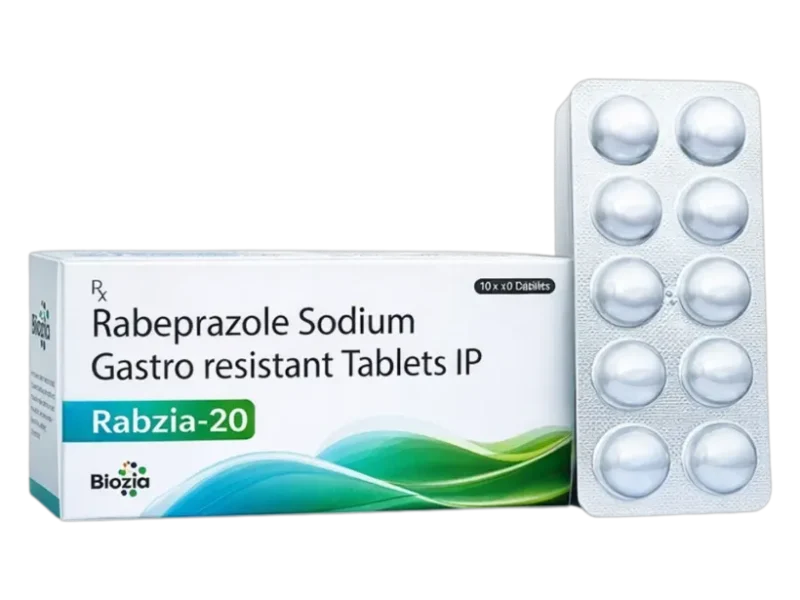
Rabzia-20 Tablet
Rabeprazole 20 mg
| Composition | Rabeprazole 20 mg |
|---|---|
| Packing | 10x10 Alu/Alu |
| MRP | ₹ 575 |
| Dosage Form | Tablets |
About Rabzia-20 Tablet
Rabzia-20 is a tablet containing Rabeprazole 20 mg, a proton pump inhibitor (PPI). It is prescribed to treat conditions caused by excess stomach acid, including acidity, heartburn, stomach ulcers, and gastroesophageal reflux disease (GERD). Rabzia-20 works by reducing the amount of acid your stomach produces, helping your gut heal and providing relief from acid-related discomfort.
Rabeprazole in Rabzia-20 is one of the more rapidly acting PPIs, offering effective acid control. It is widely used in combination with antibiotics to treat Helicobacter pylori infections and is also prescribed to protect the stomach lining in patients taking NSAIDs or aspirin for prolonged periods.
Uses of Rabzia-20 Tablet
This medicine is commonly used for:
- Acid reflux and heartburn (gastroesophageal reflux disease — GERD)
- Stomach and duodenal ulcers (peptic ulcers)
- Excess acid production conditions like Zollinger-Ellison syndrome
- Part of combination therapy for Helicobacter pylori eradication
- Protecting the stomach lining during long-term NSAID or aspirin use
Indications
Rabeprazole is indicated for the treatment of gastroesophageal reflux disease (GERD), erosive oesophagitis, duodenal ulcers, gastric ulcers, and hypersecretory conditions including Zollinger-Ellison syndrome. It is also a component of H. pylori eradication regimens in combination with appropriate antibiotics. Additionally, it is prescribed for prevention of NSAID-associated gastroduodenal ulcers in at-risk patients.
How Rabzia-20 Tablet Works
Rabzia-20 works by switching off the tiny acid pumps in the lining of your stomach that produce acid. By blocking these pumps, it significantly reduces the amount of acid released into your stomach, allowing irritated or ulcerated tissue to heal and providing relief from symptoms like heartburn, regurgitation, and stomach pain.
Mechanism of Action
Rabeprazole is a substituted benzimidazole that is converted to its active sulphenamide form in the acidic environment of gastric parietal cell canaliculi. The activated compound forms a covalent disulphide bond with cysteine residues of the H+/K+-ATPase (proton pump) enzyme, irreversibly inhibiting gastric acid secretion. Rabeprazole has a relatively faster activation profile compared to older PPIs, leading to rapid onset of acid suppression. Its effects last until new proton pumps are synthesised by parietal cells.
Key Benefits
- Rapid and effective reduction of stomach acid
- Promotes healing of stomach and oesophageal ulcers
- Provides lasting relief from heartburn and acid reflux
- Protects the stomach lining during NSAID or aspirin therapy
Did You Know?
Proton pump inhibitors like Rabeprazole were among the most important pharmaceutical developments of the 20th century, revolutionising the treatment of peptic ulcers and saving millions of patients from surgery that was once the only cure.
When & How to Take
Rabzia-20 is usually taken before a meal, typically in the morning, as directed by your doctor. Swallow the tablet whole — do not crush or chew it. Always follow the duration prescribed by your doctor, as stopping early may cause symptoms to return.
Always follow the dosage and schedule advised by your doctor — this is general guidance only.
Possible Side Effects
Rabzia-20 is generally well-tolerated. Some people may experience headache, diarrhoea, nausea, stomach pain, or flatulence. Long-term use may occasionally affect magnesium levels or bone density — your doctor will monitor this if prolonged use is needed. Tell your doctor if any side effect is severe or persistent.
Precautions & Safety
- Do not crush or chew the tablet — swallow whole
- Inform your doctor if you have liver disease before starting
- Long-term continuous use should be under regular medical review
- Inform your doctor of all other medicines you are taking, as PPIs can interact with some drugs
- Seek medical attention if symptoms do not improve within a few weeks
Myths vs Facts
You can take antacids and PPIs together for extra benefit.
PPIs like Rabeprazole work best when taken before a meal on their own. Adding frequent antacids may not add benefit and can interfere with absorption. Follow your doctor's advice.
You need to take PPIs forever once you start.
Many acid-related conditions heal with a defined course of PPI therapy. Your doctor will determine the appropriate duration. Some patients may need long-term use, but this should be assessed periodically.