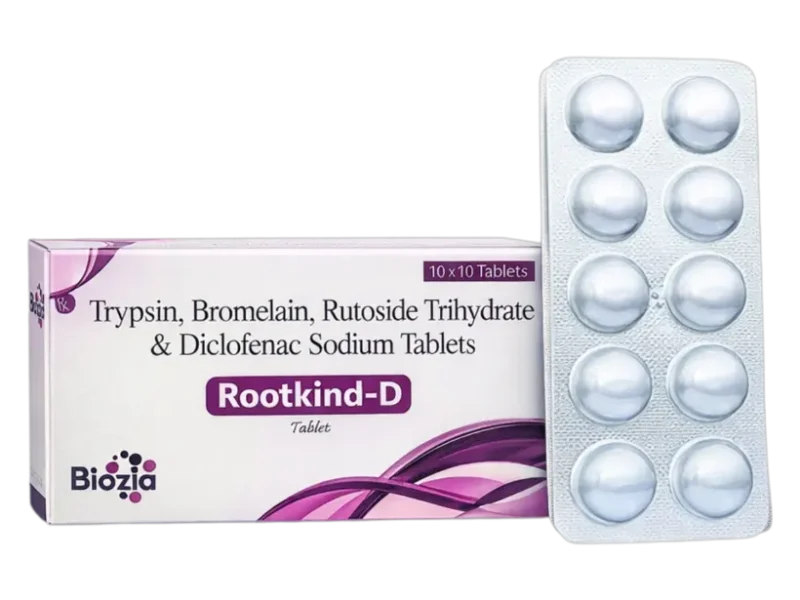
Rootkind-D Tablet
Trypsin 48 mg + Bromelain 90 mg + Rutoside Trihydrate 100 mg + Diclofenac Sodium 50 mg
| Composition | Trypsin 48 mg + Bromelain 90 mg + Rutoside Trihydrate 100 mg + Diclofenac Sodium 50 mg |
|---|---|
| Packing | 10x10 Alu/Alu |
| MRP | ₹ 2100 |
| Dosage Form | Tablets |
About Rootkind-D Tablet
Rootkind-D Tablet is a combination anti-inflammatory tablet containing Trypsin 48 mg, Bromelain 90 mg, Rutoside Trihydrate 100 mg, and Diclofenac Sodium 50 mg. It combines the proven enzyme-based anti-inflammatory action of Trypsin and Bromelain with the bioflavonoid Rutoside and the well-known NSAID Diclofenac, offering multi-layered pain and swelling relief.
The addition of Diclofenac Sodium in Rootkind-D gives this formulation stronger analgesic and anti-inflammatory potency compared to the enzyme-only Rootkind, making it suitable for conditions where both significant pain and swelling need to be controlled simultaneously, under a doctor's prescription.
Uses of Rootkind-D Tablet
This medicine is commonly used for:
- Moderate to severe post-operative pain and swelling
- Musculoskeletal pain with significant inflammation (e.g., arthritis, sprains)
- Acute sports injuries with both pain and oedema
- Post-traumatic soft tissue inflammation and bruising
- Dental pain and swelling after procedures
Indications
Trypsin-Bromelain-Rutoside-Diclofenac Sodium combination is indicated for the management of moderate to severe pain and oedema in musculoskeletal disorders, osteoarthritis, post-operative and post-traumatic conditions, acute soft tissue injuries, and dental inflammation. Diclofenac Sodium provides potent prostaglandin-mediated analgesic and anti-inflammatory activity while the enzyme-bioflavonoid complex promotes resolution of fibrinous oedema and tissue repair.
How Rootkind-D Tablet Works
Diclofenac in Rootkind-D blocks the enzymes responsible for producing the chemicals that cause pain and inflammation in injured tissues. Trypsin and Bromelain enzymes circulate in the blood and help break down the proteins that accumulate in swollen areas. Rutoside strengthens blood vessel walls to reduce further fluid leakage. Together, these four ingredients target pain and swelling from multiple angles for more complete relief.
Mechanism of Action
Diclofenac Sodium is a non-selective cyclooxygenase inhibitor that suppresses prostaglandin and thromboxane synthesis, reducing peripheral sensitisation of nociceptors and vascular permeability. Trypsin and Bromelain (serine and cysteine proteases respectively) are absorbed systemically and hydrolyse bradykinin, fibrin, complement factors, and pro-inflammatory cytokines at the oedema site, while modulating neutrophil and macrophage activity. Rutoside Trihydrate stabilises capillary endothelial junctions by inhibiting hyaluronidase and protecting collagen from oxidative damage, reducing transvascular fluid flux and vascular leakage.
Key Benefits
- Four-component formula addresses pain, inflammation, swelling, and vascular leakage together
- Diclofenac provides strong analgesic relief for moderate to severe pain
- Enzyme complex supports faster resolution of tissue oedema
- Well-rounded approach for post-surgical and traumatic injuries
Did You Know?
Diclofenac is one of the most widely used NSAIDs in the world and has been available for over 50 years. Its combination with proteolytic enzymes represents a modern approach to managing both the pain and the tissue inflammation that accompany injury recovery.
When & How to Take
Rootkind-D is generally taken after food to protect the stomach from Diclofenac's potential irritant effects, as directed by your doctor. The dose and frequency are determined by the severity of your condition — always follow your doctor's prescription precisely.
Always follow the dosage and schedule advised by your doctor — this is general guidance only.
Possible Side Effects
Common side effects include nausea, stomach pain, heartburn, or indigestion from Diclofenac. Loose stools or mild nausea from the enzyme components may also occur. Prolonged use of NSAIDs can affect the stomach lining, kidneys, or cardiovascular system. Tell your doctor if any side effect is severe or persistent.
Precautions & Safety
- Not recommended for patients with stomach ulcers, bleeding disorders, or severe kidney or liver disease
- Avoid alcohol during the course of treatment
- Inform your doctor if you are on blood thinners, other NSAIDs, or antiplatelet medicines
- Not for use in children without specific medical advice
- Use the shortest effective duration as advised by your doctor
Myths vs Facts
More anti-inflammatory medicines in one tablet means more harm to the stomach.
The enzyme and bioflavonoid components in Rootkind-D are not NSAIDs and do not add to gastric irritation. Only Diclofenac has the potential for stomach effects, and taking it with food minimises this risk.
Once swelling reduces, the pain will automatically go away without the tablet.
Pain and swelling are linked but separate processes. Your doctor prescribes Rootkind-D for a specific course — stopping early before the healing process is complete may allow symptoms to return.