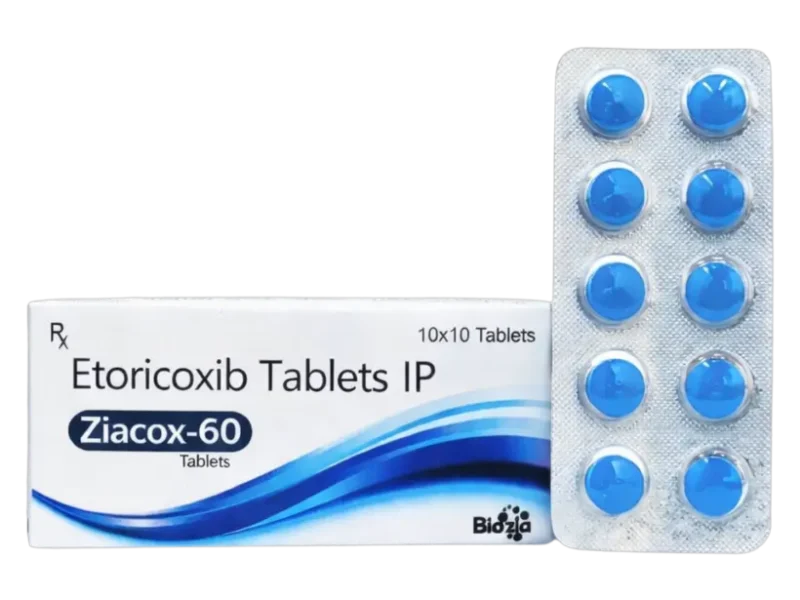
Ziacox-60 Tablet
Etoricoxib 60 mg
| Composition | Etoricoxib 60 mg |
|---|---|
| Packing | 10x10 Blister |
| MRP | ₹ 2280 |
| Dosage Form | Tablets |
About Ziacox-60 Tablet
Ziacox-60 Tablet contains Etoricoxib 60 mg, a moderate-strength selective COX-2 inhibitor widely prescribed for chronic pain conditions including osteoarthritis and rheumatoid arthritis. It effectively reduces joint pain, stiffness, and swelling while being gentler on the stomach than traditional NSAIDs.
The 60 mg dose is one of the most commonly used strengths of Etoricoxib and is well suited for the long-term management of musculoskeletal pain when guided by a doctor. Its once-daily dosing makes it a convenient option for patients with ongoing pain conditions.
Uses of Ziacox-60 Tablet
This medicine is commonly used for:
- Managing pain and stiffness of osteoarthritis
- Relieving inflammation and pain in rheumatoid arthritis
- Treating ankylosing spondylitis (inflammatory spine disease)
- Controlling moderate musculoskeletal and joint pain
- Providing anti-inflammatory pain relief for chronic conditions
Indications
Etoricoxib 60 mg is indicated for the symptomatic treatment of osteoarthritis, rheumatoid arthritis, ankylosing spondylitis, and moderate chronic musculoskeletal pain in adults. It is suitable for longer-term use than the 90 mg or 120 mg doses in appropriate patients, with cardiovascular risk assessment conducted before initiating therapy.
How Ziacox-60 Tablet Works
Ziacox-60 selectively blocks the COX-2 enzyme, which produces the prostaglandins responsible for pain and swelling in inflamed joints and tissues. By inhibiting this specific enzyme, it reduces inflammation and relieves pain without significantly disturbing the stomach-protective prostaglandins maintained by COX-1.
Mechanism of Action
Etoricoxib selectively inhibits cyclo-oxygenase-2 (COX-2) with high selectivity, suppressing prostaglandin E2 synthesis at sites of tissue inflammation and in the central nervous system, where prostaglandins amplify pain signalling. The inhibition of PGE2 and PGI2 at inflammatory loci reduces vasodilation, tissue oedema, and peripheral and central sensitisation of nociceptors. Sparing of COX-1 preserves gastroduodenal mucosal prostaglandins, reducing ulcer risk. The 60 mg dose provides sustained therapeutic prostaglandin inhibition suitable for the chronic management of arthritis conditions.
Key Benefits
- Effective once-daily relief for chronic joint pain and stiffness
- Lower gastrointestinal risk compared to traditional non-selective NSAIDs
- Suitable for longer-term arthritis management under medical supervision
- Helps improve mobility and quality of life in patients with chronic musculoskeletal conditions
Did You Know?
Osteoarthritis is one of the most common chronic conditions worldwide, affecting hundreds of millions of people. COX-2 selective inhibitors like Etoricoxib were developed specifically to provide effective joint pain relief with a lower risk of the stomach bleeding that made older NSAIDs difficult for many patients to tolerate long-term.
When & How to Take
Ziacox-60 is typically taken once daily, with or without food, as directed by your doctor. Try to take it at the same time each day. Use the lowest effective dose for the shortest time needed to control your symptoms.
Always follow the dosage and schedule advised by your doctor — this is general guidance only.
Possible Side Effects
Common side effects include headache, oedema (swelling of feet and ankles), stomach discomfort, and elevated blood pressure. With long-term use, cardiovascular and renal function should be monitored. Tell your doctor if any side effect is severe or persistent.
Precautions & Safety
- Avoid in patients with established cardiovascular disease or recent stroke
- Monitor blood pressure regularly, as Etoricoxib can raise blood pressure
- Inform your doctor of any kidney or liver problems before starting treatment
- Avoid combining with other NSAIDs, aspirin (except low-dose cardioprotective), or anticoagulants without medical advice
- This medicine is not recommended for use during pregnancy, especially the third trimester
Myths vs Facts
COX-2 inhibitors damage the kidneys faster than regular NSAIDs.
All NSAIDs — both selective and non-selective — can affect kidney function, particularly in patients who are dehydrated, elderly, or have pre-existing kidney conditions. The risk is comparable between COX-2 inhibitors and non-selective NSAIDs; regular monitoring and adequate hydration are important with any NSAID.
Once my arthritis pain is gone on Ziacox-60, I can stop taking it.
Pain relief with Etoricoxib is symptomatic — the inflammation underlying arthritis continues. Stopping abruptly may lead to a return of symptoms. Always consult your doctor before changing or stopping your prescribed regimen.