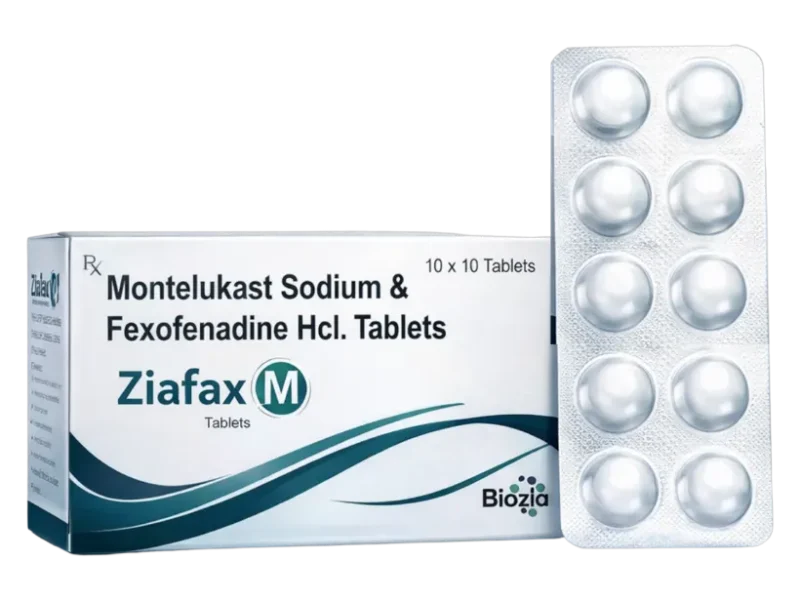
Ziafax M Tablet
Fexofenadine 120 mg + Montelukast 10 mg
| Composition | Fexofenadine 120 mg + Montelukast 10 mg |
|---|---|
| Packing | 10x10 Alu/Alu |
| MRP | ₹ 2400 |
| Dosage Form | Tablets |
About Ziafax M Tablet
Ziafax M Tablet combines Fexofenadine 120 mg and Montelukast 10 mg, delivering comprehensive allergy control through two distinct and complementary mechanisms. Fexofenadine blocks histamine receptors to relieve sneezing, runny nose, and itchy eyes without causing drowsiness, while Montelukast blocks leukotrienes to reduce nasal congestion and airway inflammation.
This combination is especially beneficial for patients with allergic rhinitis who continue to experience nasal congestion or asthma symptoms despite antihistamine therapy. Ziafax M offers the non-sedating advantage of Fexofenadine alongside the leukotriene-blocking power of Montelukast, providing broader allergy and respiratory symptom control in a single daily tablet.
Uses of Ziafax M Tablet
This medicine is commonly used for:
- Providing comprehensive allergy relief including nasal congestion not controlled by antihistamines alone
- Managing seasonal and perennial allergic rhinitis with a dual-action approach
- Controlling mild to moderate asthma triggered by allergens
- Relieving allergy symptoms in patients who need to remain alert throughout the day
- Treating chronic idiopathic urticaria alongside allergic airway disease
Indications
Ziafax M is indicated for the symptomatic treatment of seasonal and perennial allergic rhinitis, particularly in patients with co-existing mild to moderate asthma or significant nasal congestion uncontrolled by antihistamines alone. Fexofenadine provides non-sedating H1-receptor blockade for early-phase allergic symptoms; Montelukast blocks CysLT1 receptors to inhibit late-phase leukotriene-driven nasal and bronchial inflammation.
How Ziafax M Tablet Works
Fexofenadine in Ziafax M blocks histamine receptors to quickly relieve itching, sneezing, and watery eyes — and it does so without crossing into the brain, so there is no drowsiness. Montelukast blocks leukotrienes, different allergy chemicals that cause nasal congestion and airway narrowing. Together, these two medicines address the full spectrum of allergic rhinitis symptoms — from the immediate sneezing to the persistent stuffiness that antihistamines alone may miss.
Mechanism of Action
Fexofenadine competitively antagonises peripheral H1-histamine receptors with minimal CNS penetration (due to P-glycoprotein efflux at the blood-brain barrier), providing non-sedating histamine blockade. Montelukast is a selective competitive antagonist at cysteinyl leukotriene receptor 1 (CysLT1), blocking LTC4, LTD4, and LTE4 — potent lipid mediators released by mast cells and eosinophils during allergic reactions. Leukotrienes drive the late-phase allergic response including mucosal oedema, goblet cell secretion, eosinophilic infiltration, and bronchomotor tone. By combining H1 and CysLT1 blockade, Ziafax M suppresses both the early and late phases of the allergic response comprehensively.
Key Benefits
- Non-sedating allergy relief with Fexofenadine — no compromise on daytime alertness
- Montelukast targets nasal congestion and airway inflammation beyond antihistamine reach
- Effective for patients with coexisting allergic rhinitis and asthma
- Single tablet convenience for a dual-mechanism treatment regimen
Did You Know?
Leukotrienes are 1,000 times more potent than histamine as bronchoconstrictors — yet they are not blocked by antihistamines. This is why patients with allergy-triggered asthma or stubborn nasal congestion often need a leukotriene receptor antagonist like Montelukast in addition to their antihistamine, making the combination in Ziafax M clinically sound.
When & How to Take
Ziafax M is typically taken once daily in the evening as directed by your doctor. Evening dosing aligns with the traditional timing of Montelukast for asthma and allows Fexofenadine's effect to be active throughout the following day. Take with water, not fruit juice. Follow your doctor's instructions.
Always follow the dosage and schedule advised by your doctor — this is general guidance only.
Possible Side Effects
Fexofenadine is generally very well tolerated with no significant sedation. Montelukast may rarely cause headache, stomach upset, or mood-related changes such as restlessness or unusual dreams. Inform your doctor promptly if you notice behavioural changes. Tell your doctor if any side effect is severe or persistent.
Precautions & Safety
- Take with water only — fruit juices (grapefruit, orange, apple) can reduce Fexofenadine absorption
- Inform your doctor of any history of mood disorders, as Montelukast rarely affects mood
- Ziafax M is not a rescue medicine for acute asthma — always keep your inhaler available
- Tell your doctor about all medicines you take, including antacids (take 2 hours apart from Fexofenadine)
- Consult your doctor before use in pregnancy or breastfeeding
Myths vs Facts
A non-drowsy antihistamine handles all allergy symptoms effectively.
Antihistamines like Fexofenadine are excellent for sneezing, itching, and watery eyes, but nasal congestion is primarily driven by leukotrienes, not histamine. Adding Montelukast in Ziafax M specifically addresses this gap, providing more complete relief.
Montelukast is a steroid.
Montelukast is not a steroid. It is a leukotriene receptor antagonist — a non-steroidal agent that works by blocking a specific set of inflammatory chemicals called leukotrienes. It has a completely different mechanism and safety profile from corticosteroids.