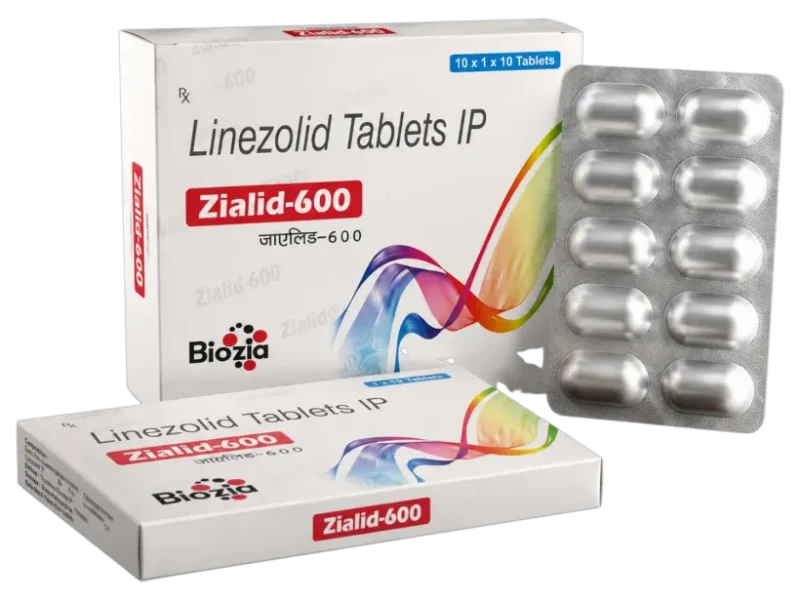
Zialid-600 Tablet
Linezolid 600mg
| Composition | Linezolid 600mg |
|---|---|
| Packing | 10X1x10 Alu/Alu |
| MRP | ₹ 3560 |
| Dosage Form | Tablets |
About Zialid-600 Tablet
Zialid-600 Tablet contains Linezolid 600 mg, a powerful oxazolidinone class antibiotic reserved for serious Gram-positive bacterial infections — including those caused by methicillin-resistant Staphylococcus aureus (MRSA) and vancomycin-resistant Enterococci (VRE). Linezolid is a critically important medicine prescribed under specialist supervision for infections that have not responded to first-line antibiotics.
Zialid-600 represents an essential treatment option when multidrug-resistant organisms are involved. It is prescribed in healthcare settings for conditions like hospital-acquired pneumonia, complicated skin and soft tissue infections, and certain bone and joint infections caused by resistant bacteria.
Uses of Zialid-600 Tablet
This medicine is commonly used for:
- Treating infections caused by MRSA (methicillin-resistant Staphylococcus aureus)
- Managing vancomycin-resistant Enterococcal (VRE) infections
- Treating hospital-acquired and community-acquired pneumonia from susceptible organisms
- Managing complicated skin and soft tissue infections
- Treating bone, joint, and bloodstream infections caused by resistant Gram-positive bacteria
Indications
Linezolid 600 mg is indicated for the treatment of infections caused by susceptible Gram-positive organisms including MRSA, methicillin-susceptible Staphylococcus aureus (MSSA), Streptococcus pneumoniae, and vancomycin-resistant Enterococcus faecium and faecalis. Clinical indications include nosocomial pneumonia, community-acquired pneumonia, complicated skin and soft tissue infections, diabetic foot infections, and infections at other sterile sites where Gram-positive pathogens are confirmed or suspected. It is designated by WHO as a critically important antibiotic for human medicine.
How Zialid-600 Tablet Works
Linezolid in Zialid-600 works at a very early stage of bacterial protein production, preventing bacteria from making the proteins they need to grow and multiply. Crucially, it blocks bacteria in a way that is different from most other antibiotics, which is why it can still work against bacteria that have become resistant to many other medicines.
Mechanism of Action
Linezolid is a synthetic oxazolidinone antibiotic that inhibits bacterial protein synthesis by binding to the 23S ribosomal RNA of the 50S ribosomal subunit, preventing the formation of the 70S initiation complex (30S + 50S assembly). This is a unique site and mechanism not shared by any other antibiotic class, meaning there is no cross-resistance with macrolides, chloramphenicol, aminoglycosides, or other ribosomal inhibitors. The result is a bacteriostatic effect against Staphylococci and Enterococci, and bactericidal activity against certain Streptococci. Linezolid also weakly inhibits monoamine oxidase (MAO), which contributes to its most important drug and dietary interactions.
Key Benefits
- Active against MRSA and VRE — bacteria resistant to many other antibiotics
- Unique mechanism of action with no cross-resistance to other antibiotic classes
- Available as an oral tablet with good bioavailability, facilitating step-down from IV therapy
- A critical treatment option for life-threatening resistant Gram-positive infections
Did You Know?
Linezolid in Zialid-600 was the first entirely new antibiotic class approved in over 30 years when it was introduced in 2000 — the first oxazolidinone to reach clinical use. This milestone was significant because the late 20th century saw very few genuinely new antibiotic classes, making Linezolid a landmark in the fight against resistant bacteria.
When & How to Take
Zialid-600 is taken exactly as prescribed by your doctor — typically twice daily with or without food, at regular intervals. The full course must be completed as directed. Do not skip doses or stop early, even if you feel better. Your doctor will determine the treatment duration based on the infection being treated.
Always follow the dosage and schedule advised by your doctor — this is general guidance only.
Possible Side Effects
Common side effects include nausea, diarrhoea, headache, and altered taste. With courses exceeding 2 weeks, linezolid can cause myelosuppression (reduced blood cell counts) — your doctor will monitor your blood counts regularly during treatment. Prolonged use may also rarely cause peripheral neuropathy or optic neuropathy. Tell your doctor if any side effect is severe or persistent.
Precautions & Safety
- Inform your doctor of all medicines you are taking — Linezolid interacts with many medicines including antidepressants (serotonin syndrome risk), decongestants, and certain pain medicines
- Avoid foods high in tyramine (aged cheeses, cured meats, fermented foods, red wine) during treatment due to the MAO-inhibiting effect of Linezolid
- Regular blood count monitoring is required, especially with treatment courses longer than two weeks
- Report any visual disturbances or tingling in hands and feet to your doctor immediately
- This is a critically important antibiotic — use only under specialist supervision for confirmed or strongly suspected susceptible infections
Myths vs Facts
Linezolid can be used for any bacterial infection.
Linezolid is specifically active against Gram-positive bacteria, such as Staphylococci, Enterococci, and Streptococci. It has no significant activity against Gram-negative organisms. Using it inappropriately risks treatment failure and contributes to antibiotic resistance — it must only be used as prescribed by a specialist.
Stopping antibiotics once you feel better is fine.
Stopping Linezolid — or any antibiotic — early leaves surviving bacteria that may be the more resistant ones, leading to a relapse that is harder to treat. Completing the full prescribed course is essential to cure the infection completely.